Last updated October 31, 2026
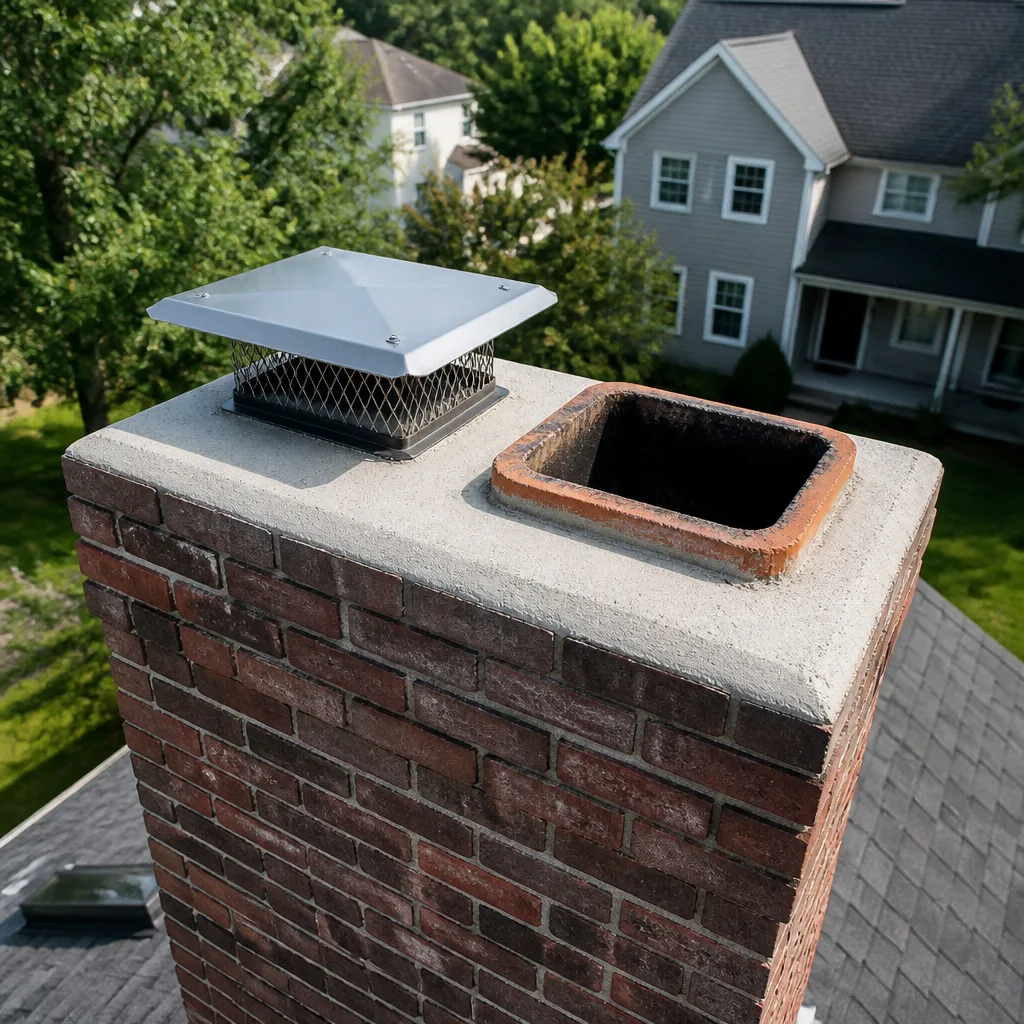 Sweep & inspection
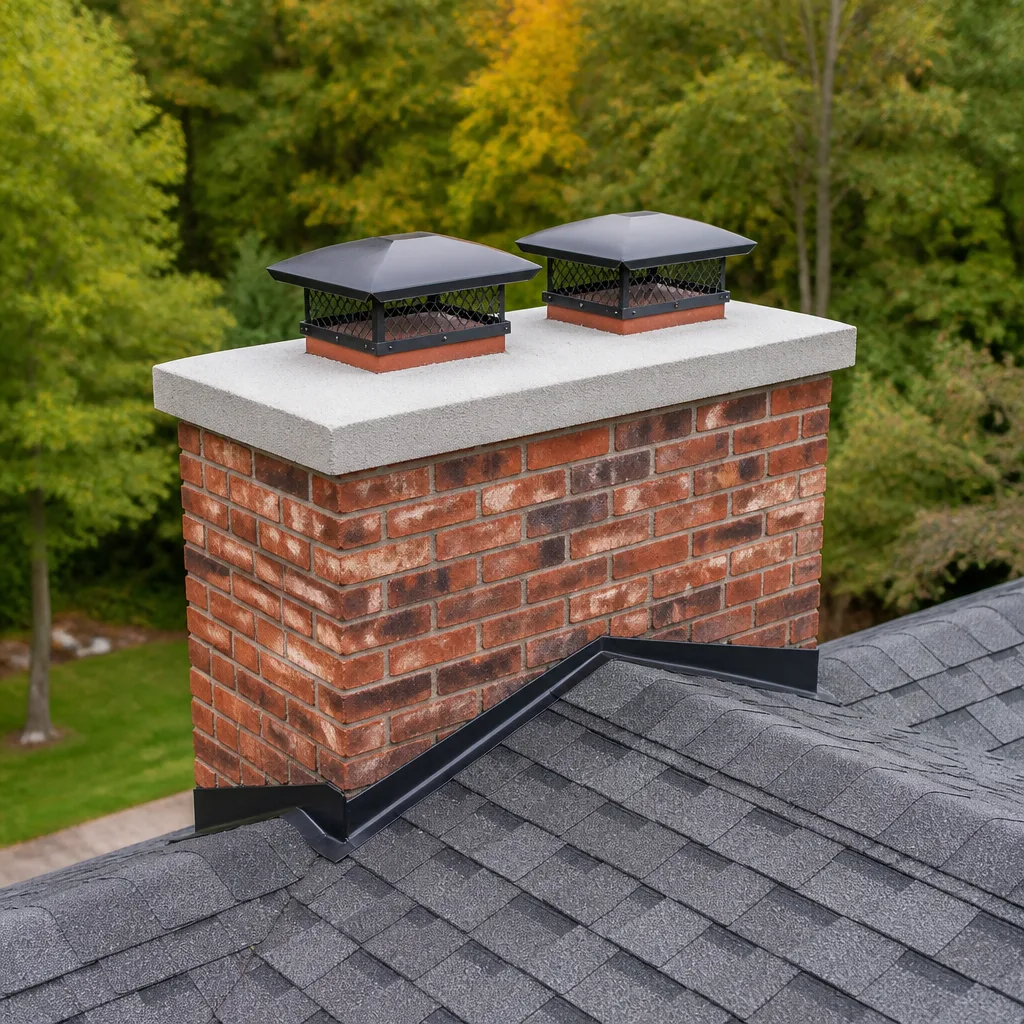 Caps & crowns
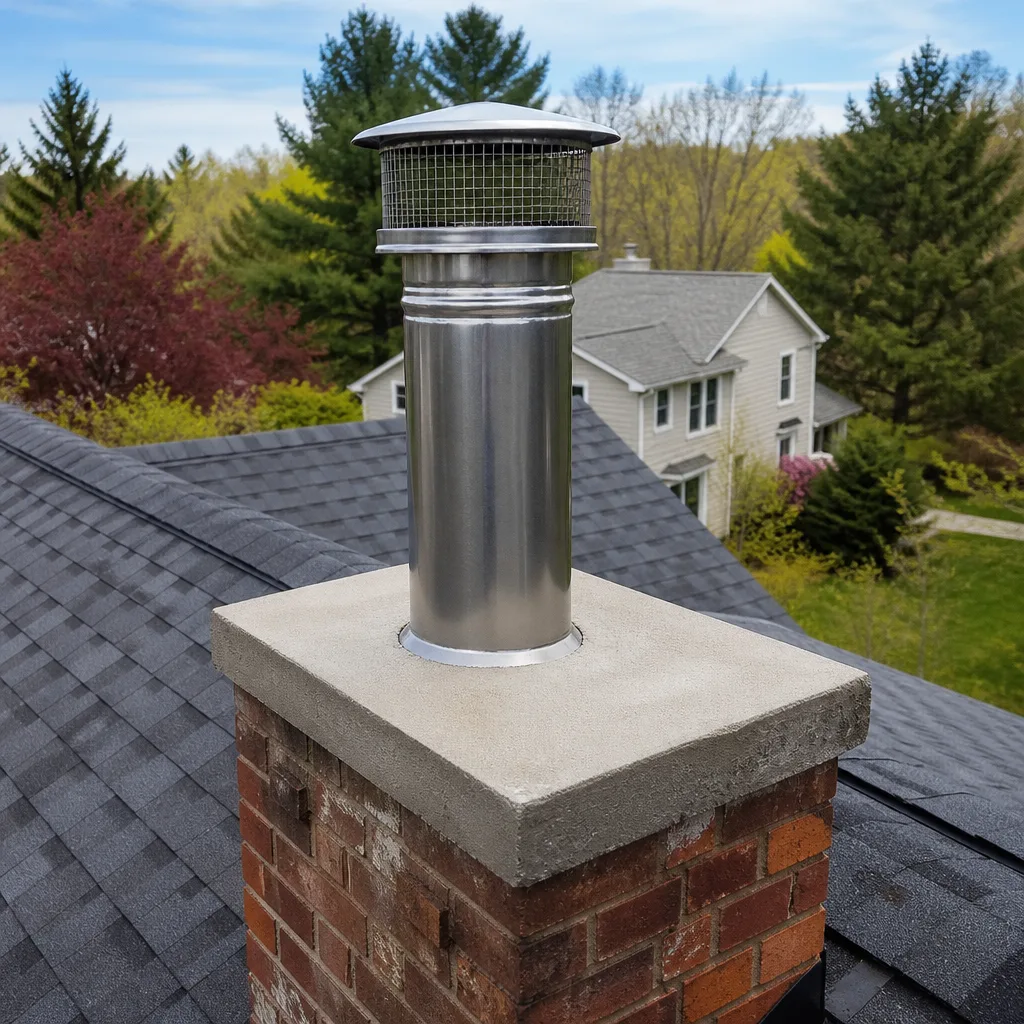 Flue relining
 Masonry repair
 Gas fireplace service
Level 1 sweep and inspection to the NFPA 211 annual standard - flue, crown, cap, and flashing checked and photographed
Chimney sweep logs do not sweep chimneys. They loosen some creosote - which then falls where a brush and vacuum still have to collect it.
How to Hire a Chimney Cleaning Contractor in Garden Grove: A Step-by-Step Guide
Here’s a counterintuitive fact about the chimney service trade in Southern California: the person who shows up to sweep your flue is often not the person who can fix what they find. In Garden Grove, where many homes were built between 1955 and 1975, the original masonry chimneys are now showing their age, and a basic sweeping frequently uncovers cracked flue tiles, deteriorated mortar joints, or missing caps. The handoff between a sweep-only operator and a separate repair contractor is where homeowners get overcharged, misdiagnosed, or stuck waiting weeks for a second company to schedule the follow-up work. This guide gives you a concrete vetting process so the contractor you hire in Garden Grove can finish the job they start. For more guides & resources, visit our blog.
Quick Answer
To hire a chimney cleaning contractor in Garden Grove, verify they hold a California contractor’s license (CSLB) with a C-61/D-38 specialty classification for limited specialty work or a broader B classification, confirm they carry general liability and workers’ compensation insurance, ask whether the inspection uses a real camera and whether you can see the footage, and insist on a written quote that separates cleaning from repair work. Choose a company that can perform both sweeping and repairs under one roof rather than one that subcontracts or refers repair work to a third party.
Styles & brands we work with
Table of Contents
- California Licensing and Insurance Requirements for Chimney Contractors
- What CSIA and Other Certifications Actually Mean in California
- The Exact Questions to Ask Before You Book
- Why “Inspection Included” Does Not Always Mean Camera Inspection
- How to Read a Chimney Service Quote Line by Line
- Red Flags Specific to LA-Area Chimney Companies
- How a Full-Stack Chimney Company Differs From a Sweep-and-Refer Model
- Garden Grove-Specific Considerations: Climate, Codes, and Older Homes
California Licensing and Insurance Requirements for Chimney Contractors
In California, anyone performing chimney work that costs more than $500 in combined labor and materials must hold a contractor’s license issued by the California Contractors State License Board (CSLB). This applies to repairs, relining, rebuilds, and even sweeping if the total job crosses that threshold. The relevant classification for chimney specialists is C-61/D-38, which covers limited specialty work in the chimney and venting category. Some companies carry a general B classification, which also permits them to perform chimney work. Here’s how to check a contractor before you let them on your roof.
- Ask for the CSLB license number. A legitimate Garden Grove chimney contractor will provide this without hesitation. You can verify it at the CSLB website in under two minutes.
- Confirm the classification. The license should list C-61/D-38 or B. A license in an unrelated trade, like landscaping or painting, does not authorize chimney work. This matters because unlicensed operators in the LA area frequently borrow or display license numbers that belong to someone else.
- Verify insurance directly. Ask for a certificate of insurance and call the carrier or check the policy number online. General liability protects your home if the contractor damages the roof or firebox. Workers’ compensation covers you if a technician is injured on your property. In California, if an uninsured worker is hurt on your property, the homeowner can be held liable. This is not a theoretical risk. Chimney work involves ladders, roofs, and sometimes heights of two stories or more, and injuries in this trade happen more often than most homeowners assume.
- Check for active status. The CSLB database will show whether a license is active, suspended, or expired. Do not accept a paper copy of a license. Verify it yourself. Garden Grove sits within a dense service market, and companies with suspended licenses rarely volunteer that information.
We mention Garden Grove specifically because the city’s housing stock includes a high concentration of single-story ranch homes and two-story traditional builds where roof pitch varies enough to affect how difficult a chimney is to access. A company without proper insurance will still take the job. The risk lands on you, not them. This is the single most overlooked vetting step we see, and it costs nothing to get right.
What CSIA and Other Certifications Actually Mean in California
The Chimney Safety Institute of America (CSIA) issues a widely recognized certification for chimney sweeps. It demonstrates that a technician has passed an exam covering codes, clearances, and inspection procedures. It also requires continuing education credits to maintain. That is a meaningful credential. However, here is what it does not do: it does not license anyone to perform work in California, and it does not replace a CSLB license, which is the only credential the state recognizes for legal contracting work. A sweep can hold a CSIA certification and still be operating illegally if they lack a CSLB license.
Other certifications exist. The National Fireplace Institute (NFI) certifies technicians in specific categories like gas and wood-burning systems. The F.I.R.E. Certified Inspector program focuses on inspection methodology. None of these replace the legal requirement in California. When you evaluate a Garden Grove chimney company, treat third-party certifications as a quality signal on top of the state license, never as a substitute for it. A company that advertises “certified” without listing a CSLB number is telling you something useful about how they operate.
In our experience working with homeowners throughout Orange County, the most trustworthy companies are the ones that list both: state license and certification. They are not hiding anything, and they understand that licensing is the cost of doing legitimate business in California. If a company deflects when you ask for a license number, end the call. There are too many properly licensed options in and around Garden Grove to take that risk.
The Exact Questions to Ask Before You Book
When you call a chimney cleaning contractor in Garden Grove, the way they answer your questions tells you more than any website copy. Here are the questions that separate a competent operator from a franchise call center or an unlicensed handyman.
- “What is your CSLB license number?” If they pause, get defensive, or say they only do “small jobs,” move on. A real chimney company in California knows this question is coming and answers it immediately.
- “Do you carry workers’ compensation insurance?” Some owner-operators skip this because they have no employees. In California, a sole proprietor with no employees may be exempt, but only if they file for an exemption with the state. If more than one person will be on your roof, workers’ comp should be in force. The risk of a ladder fall or roof injury in Orange County is real, and you do not want that liability on your homeowner’s policy.
- “Does the sweep include a camera inspection, and can I see the footage?” This is the single most important question. A basic visual inspection with a flashlight and mirror cannot see inside a flue liner. A camera can. We’ll go deeper on this below, but asking this question before booking filters out a surprising number of companies.
- “If you find damage, do you repair it yourself or refer it out?” This is the question that exposes the sweep-and-refer model. If the answer is “we’ll refer you to someone,” then know you are hiring the first of two companies, not one. In Garden Grove, the second company may be anyone. The handoff is where pricing becomes opaque and accountability disappears.
- “What is your price for a standard cleaning and inspection, and is it a flat rate?” Some companies quote a low base price and then add fees for the cap, the chase cover, the damper, or the dryer vent. A flat-rate price agreed before the appointment gives you a benchmark for comparing quotes. If they refuse to quote over the phone, ask why.
- “Do you clean dryer vents?” This may seem like an unrelated question, but it is a useful signal. A company that treats the dryer vent as part of the home’s overall fire-safety picture is thinking about the whole system rather than just the chimney. The Walnut Chimney home page explains our approach, but the point here is that a company that only sweeps chimneys and has no answer for dryer vents is often a narrower operator than you need.
Why “Inspection Included” Does Not Always Mean Camera Inspection
A standard chimney sweeping includes a visual check of the firebox, damper, and cap. That is what most companies mean when they say “inspection included.” The problem is that the flue liner, which is the part of the chimney that contains fire and directs exhaust, cannot be meaningfully assessed from either end with a flashlight. Cracks in clay tile liners, gaps at mortar joints, and hidden creosote buildup are all invisible to a basic visual inspection. In a 1960s Garden Grove ranch home, the original clay liner has been expanding and contracting with heat for sixty years. Hairline cracks are common and often undetectable without a camera.
A camera inspection runs a small video probe down the flue and records footage you can see for yourself. This is not a gimmick. It is the difference between knowing the interior of your chimney is intact and taking someone’s word for it. Here is the exact question to ask before booking: “Does the inspection include camera footage of the flue liner, and will I be able to see it?” If the answer is no, then the inspection is not actually inspecting the part of the chimney most likely to fail.
What you should expect to see in the footage is the condition of the liner walls, any gaps or separations, creosote buildup, and the cap from above. A company that performs camera inspections will walk you through the footage and point to specific findings. A company that does not will hand you a checklist and say everything looks fine. In Garden Grove’s older housing stock, where many chimneys have never had a liner replaced, the camera often finds issues that basic sweeping misses. That is exactly why you want it, not why you should skip it.
How to Read a Chimney Service Quote Line by Line
A chimney quote reveals more than the final number. The structure of the quote tells you whether the company is organized, honest, and capable of the work. For a detailed breakdown of what to expect, see our Chimney Cleaning Cost Breakdown: The Garden Grove Homeowner’s Reference for 2026. Here is how to read one.
- Sweeping and inspection as separate line items. A low-quality operator will bundle everything into one vague “chimney service” line. A competent company separates the sweep from the inspection because they are different procedures requiring different tools. In our work with Chimney Sweep in West Athens and across the LA basin, we see this same pattern: specificity in the quote predicts specificity in the work.
- Material names, not vague descriptions. If the quote says “new liner,” ask what type and what brand. A company that specifies “DuraFlex 316Ti stainless liner” or “HeatShield ceramic resurfacing” is using professional-grade materials and knows exactly what the job involves. A company that writes “new pipe” is either hiding something or does not understand what they are quoting. Professional-grade brands like Olympia Chimney and Famco appear on quotes from companies that buy from real supply chains rather than whatever is cheapest at the hardware store.
- Line items for components. A quote for a cap replacement should name the cap, the material, and the labor separately. If a company wants to replace your cap, your damper, and your chase cover all in one visit, ask to see why each one is failing. Some legitimately fail together. But a bundled “full service” quote on a first visit is a classic upsell pattern in the LA market.
- No pressure language. A written quote should stand on its own. It should not require you to sign the same day, and it should not include phrases like “special discount if you book before I leave.” That pressure exists to prevent you from getting a second opinion, which is exactly what a low-quality quote cannot survive.
- Payment terms in writing. A reputable company will state when payment is due, how deposits work, and what happens if additional work is discovered mid-job. In California, contractors cannot ask for more than $1,000 or 10 percent of the job total as a down payment, whichever is less, unless they carry a special performance and payment bond. If a chimney company asks for half up front on a large repair, they are either unaware of the law or ignoring it.
Red Flags Specific to LA-Area Chimney Companies
The greater LA market, including Orange County and Garden Grove, has its own set of warning signs that you will not find in generic online guides. Some of these are specific to how the chimney and vent service trade operates in Southern California.
- Unmarked vans and no branded paperwork. A company that shows up in a rental truck with no signage and hands you a handwritten receipt is not operating like a licensed business. In a market as dense as Garden Grove, a real chimney company can afford a branded vehicle. The absence of branding usually means the person does not want to be traceable.
- Pressure-selling Level 3 inspections on a first visit. A Level 3 inspection involves removing parts of the chimney or building structure and is appropriate after a chimney fire, an earthquake, or a known structural problem. It is almost never appropriate for a routine cleaning visit. If a technician looks at your chimney for ten minutes and then insists you need a Level 3 inspection for several thousand dollars, get a second opinion. Garden Grove sits in an earthquake zone, and some operators use that fact to scare homeowners into unnecessary structural work.
- “We’ll have our repair guy call you.” This is the handoff red flag. A company that cleans and then refers you to a separate contractor for repairs has no accountability for the repair work. You are now hiring a second company based on the first company’s word that damage exists. A full-stack company that handles both cleaning and repair under one roof removes the structural incentive to find phantom damage.
- Quotes that expire in 24 hours. A legitimate quote for chimney work should be valid for at least a week, usually longer. Expiring quotes exist to pressure you into a decision before you can compare. This is a known pattern in the LA service market, not just chimneys, and it is always a reason to slow down.
- Subcontracting without disclosure. Ask directly: “Who will be doing the work, your employees or a subcontractor?” In California, unlicensed subcontracting is illegal in most cases. Some companies sell the job and then send a third-party crew that was never vetted by you. If the person who sold you the job will not be on site, that needs to be disclosed in writing before you sign.
How a Full-Stack Chimney Company Differs From a Sweep-and-Refer Model
The structural difference between these two business models is the single most important factor in your hiring decision, and almost no guide covers it. Here is how it works.
A sweep-and-refer company does one thing: they clean chimneys. When they find damage, they refer you to a separate contractor, sometimes for a commission. The problem is that the referring company has an incentive to find damage, because the referral is where they make additional money, and the repair contractor has no relationship with you until the job starts. The handoff creates a gap in accountability. If the repair is done wrong, the repair contractor blames the sweep, and the sweep says their job was just the cleaning.
A full-stack company handles the cleaning, the inspection, and the repair under one roof. The technician who finds the cracked flue tile is the same company that quotes the repair, and often the same crew that performs it. There is no referral and no handoff. When we repair what we find, the material selection is tied to the specific problem: HeatShield ceramic resurfacing for spalling or minor flue damage, DuraFlex flexible liners for full relines, and components from Gelco or Olympia Chimney for caps and terminations. The point is not the brand names. The point is that a full-stack company has to stand behind the repair because there is no one else to blame.
This matters for pricing too. A sweep-and-refer model prices the cleaning cheaply and the repair opaquely. A full-stack model prices both transparently because the company knows what the materials and labor actually cost. In Garden Grove, where chimney repairs on older homes can range from minor cap replacements to full liner installations, the full-stack approach gives you one warranty, one point of contact, and one company that is accountable for the entire system from the firebox to the cap. Chimney Repair in West Athens follows the same principle: a single company that diagnoses and fixes, no referral, no gap.
Garden Grove-Specific Considerations: Climate, Codes, and Older Homes
Garden Grove has a Mediterranean climate with mild, wet winters and hot, dry summers. This matters for chimney care in three specific ways. First, the wet-dry cycle accelerates mortar deterioration. Rainwater seeps into small cracks in the crown or joints during winter, then the summer heat expands that moisture and widens the cracks. Over decades, this cycle is what causes spalling brick and failing crowns on older Garden Grove chimneys. Second, the dry season means creosote that accumulated from winter fires can harden and become more difficult to remove, which is why an annual sweep timed for late summer or early fall is the right schedule for this climate—see our Seasonal Chimney Cleaning Care for Garden Grove: Year-Round Homeowner’s Guide for the full maintenance calendar. Third, Garden Grove’s proximity to the coast means salt air affects metal components like caps and dampers faster than it would inland. Galvanized steel caps rust through faster near the coast, which is why stainless options are often the better investment here.
Beyond climate, the city’s building stock has a specific character. The post-war expansion of Garden Grove produced thousands of single-family homes with masonry chimneys built between 1950 and 1980. Many of those chimneys still have their original clay tile liners, and those liners are now 50 to 70 years old. Clay tile is durable but brittle, and decades of thermal cycling leave hairline cracks that are invisible without a camera. A camera inspection on a 1965 Garden Grove home will often reveal liner damage that the homeowner assumed was fine because the chimney has never been used heavily. This is exactly the situation where a sweep-and-refer company sees dollar signs and a full-stack company sees a straightforward repair.
Local code matters too. Garden Grove enforces California building codes with local amendments, and any major chimney work requires permits. Repointing mortar or replacing a cap generally does not. A full reline or rebuild does. A competent local contractor knows which jobs trigger which requirements and will tell you plainly. If a company tells you that no chimney work ever needs a permit in Garden Grove, they are either uninformed or hoping you are. Ask the question and watch the answer. A professional will be specific about what triggers permitting and what does not.
Common Mistakes to Avoid
- Hiring based on price alone. A $79 sweep-and-inspection in Garden Grove is almost always a loss-leader for a $2,000 repair claim that may or may not be real. If the price is far below the market, the quote structure will usually reveal why: the upsell is built into the business model.
- Assuming a CSIA certification replaces a CSLB license. It does not. Certification is a credential. Licensing is a legal requirement. In California, you need the license, and the certification is a bonus. Do not confuse the two.
- Booking without asking about camera inspection. If you do not ask, the default is a flashlight-and-mirror check that cannot see inside the flue liner. On an older Garden Grove home, that means the part of the chimney most likely to fail goes uninspected while you are told everything is fine.
- Skipping the insurance check. Workers’ compensation is not a formality. A roofer’s fall or a ladder accident on your property becomes your liability if the contractor is not properly insured. This is a real risk in a trade that involves roof access, and it takes two minutes to verify.
- Accepting a referral without question. “We’ll have our repair guy call you” sounds helpful, but it means you are hiring a second company with no relationship to the first. The repair contractor’s incentive is to sell you work, not to make the original company look good. This is where homeowners in Orange County get overcharged.
- Waiting until winter to schedule. Garden Grove’s rainy season starts in November, and every chimney company in the region books up in late fall. If you schedule in August or September, you get a better choice of contractors, more time for repairs, and no pressure to sign before the first rain.
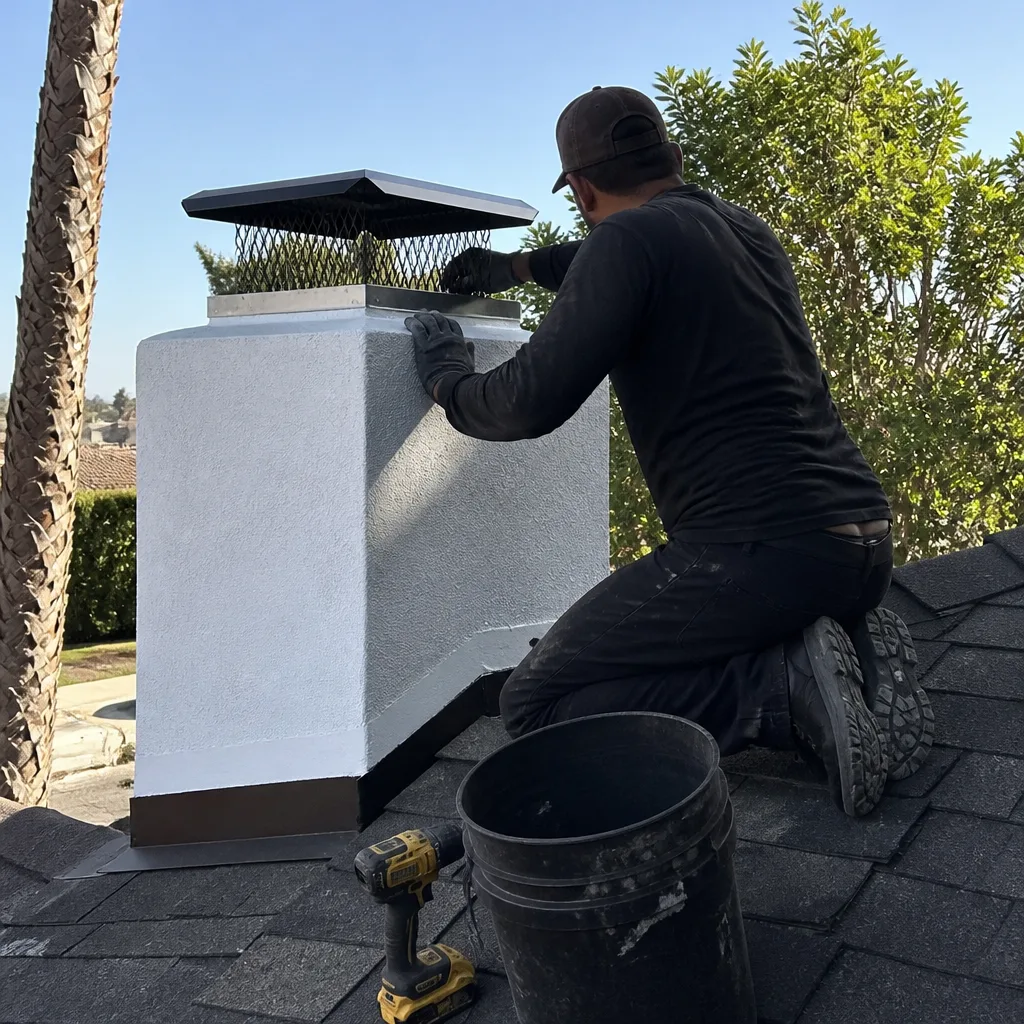
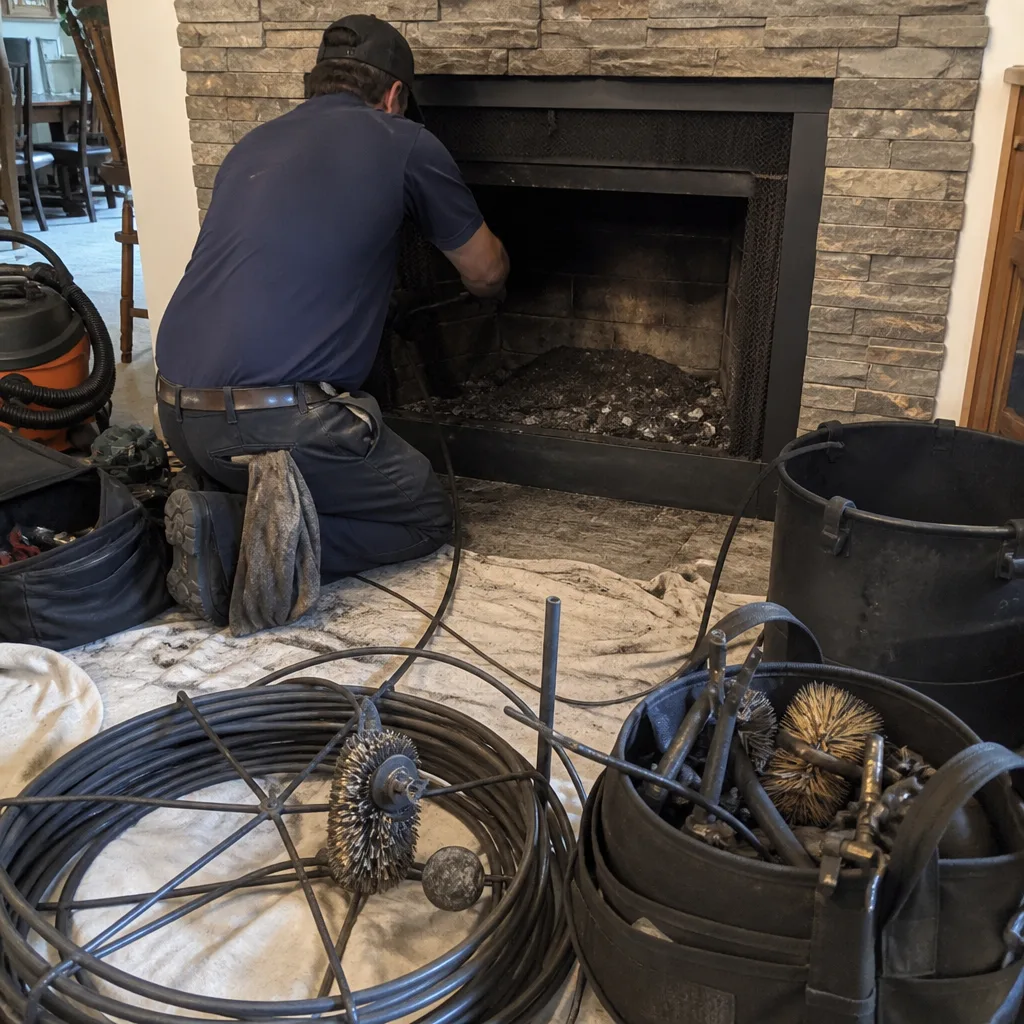
See the difference
 Before
 After
 Before
 After
 Before
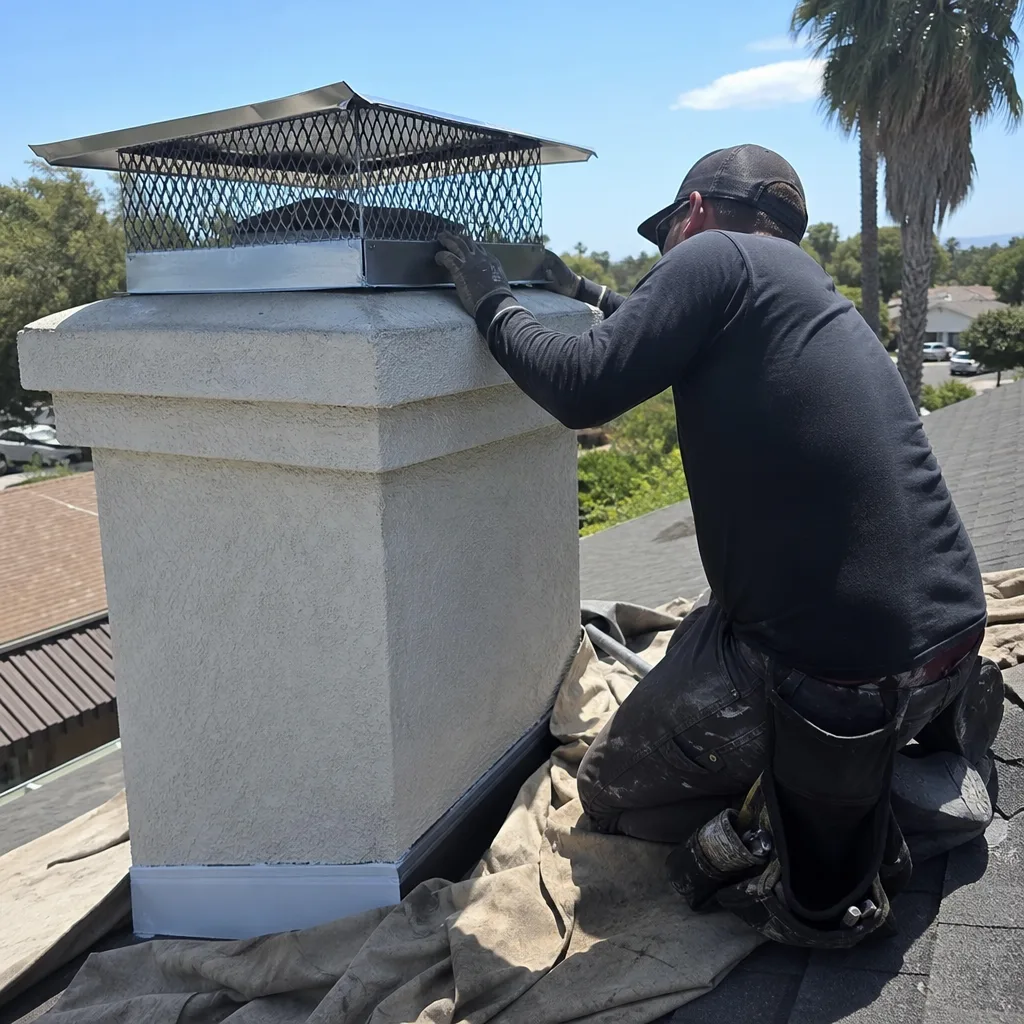 After
When to Call a Professional
Call a professional if you have not had your chimney inspected in more than a year, if you notice a smoky smell in the house even when the fireplace is not in use, if you see white staining or spalling bricks on the exterior chimney, if you hear or see animals in the flue, or if your dryer vent has not been cleaned in over a year and clothes are taking longer to dry. Any of these conditions warrants a professional evaluation, and on an older Garden Grove home, several of them often appear together. A camera inspection will answer the liner question definitively without guesswork. Walnut Chimney offers free estimates in Garden Grove. Call (855) 341-3461 to schedule a sweep and inspection.
Frequently Asked Questions
A standard chimney sweeping in Garden Grove typically runs between $150 and $350 depending on the system type, roof access, and the condition of the flue. Add a camera inspection and the price moves toward the higher end, but the camera is almost always worth the cost on older homes. Avoid any quote below $100: at that price, the company is not making money on the sweep, which means they intend to make money on something else, usually an upsell you may not need. Call (855) 341-3461 for a specific quote on your Garden Grove home.
The National Fire Protection Association recommends a chimney inspection at least once a year and a sweeping whenever creosote buildup reaches 1/8 inch or more. For a Garden Grove home that sees regular fireplace use during the winter, a yearly sweep scheduled in late summer or early fall is the right rhythm. Homes that burn unseasoned wood or use the fireplace heavily may need a mid-season follow-up.
You should not accept a liner replacement recommendation without seeing camera footage of the damage. Cracked clay tile, spalling, gaps at joints, or rust-through on a metal liner are all legitimate reasons for relining, and those conditions are visible on camera. If a company recommends a new liner but will not show you footage or explain the specific defect, get a second opinion. HeatShield ceramic resurfacing can address some liner damage without a full replacement, and a competent contractor will explain which option fits your chimney rather than defaulting to the most expensive one.
Creosote is combustible, and enough of it in the flue creates the conditions for a chimney fire, which can crack liners and spread to the house. Our Chimney Cleaning Emergency Preparedness Guide for Garden Grove Homes covers what to do if you suspect a fire has started. A cracked or gaps-in-liner flue also allows heat and exhaust gases, including carbon monoxide, to move into walls or living spaces rather than out the top. A blocked cap or animal nest creates the same risk. Skipping maintenance for a year is usually fine. Skipping it for five years on an older Garden Grove chimney is a gamble with no payoff.
Yes, and a full-stack company like Walnut Chimney includes dryer vent cleaning as a core service rather than an add-on. Dryers are one of the leading causes of home fires according to the NFPA, and the vent is part of the same whole-home exhaust picture as the chimney. When we handle Dryer Vent Cleaning in West Athens, we treat it with the same inspection-first approach we use on chimneys. Having both done in one visit is more efficient and gives you one point of accountability for your home’s venting systems.
Minor work like cap replacement, repointing mortar, or damper repair generally does not require a permit. A full liner replacement, a rebuild, or structural modification usually does. A licensed local contractor will tell you which category your job falls into and will handle the permitting if it is required. If a company tells you that no chimney work in Garden Grove ever requires a permit, treat that as a red flag and verify directly with the city before signing.
The Bottom Line
Hiring a chimney cleaning contractor in Garden Grove comes down to verifying three things: the legal basics, the inspection standard, and the business structure. The legal basics are a CSLB license and insurance, checked directly by you, not taken on faith from a website. The inspection standard is a camera, not a flashlight, and the footage should be shown to you, not summarized for you. The business structure is the difference between a company that cleans and disappears and a company that repairs what it finds using the right materials for the specific problem. Get all three right and you will find a contractor who treats your chimney as a system that needs honest evaluation, not a sales opportunity. Walnut Chimney serves Garden Grove with sweeping, repair, and dryer vent cleaning under one roof. Call (855) 341-3461 for a free estimate.
Written by the team at Walnut Chimney, serving Garden Grove since 2017.