
Last updated October 31, 2026
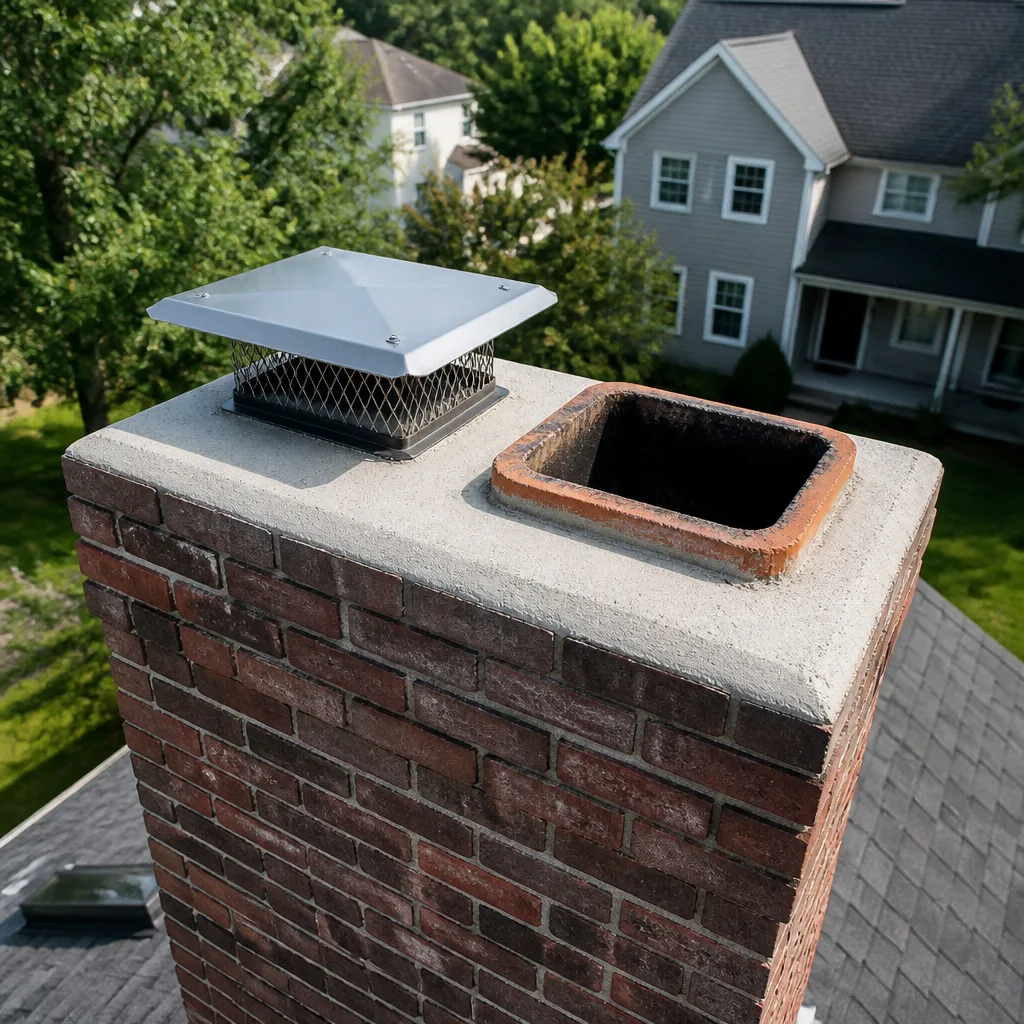 Sweep & inspection
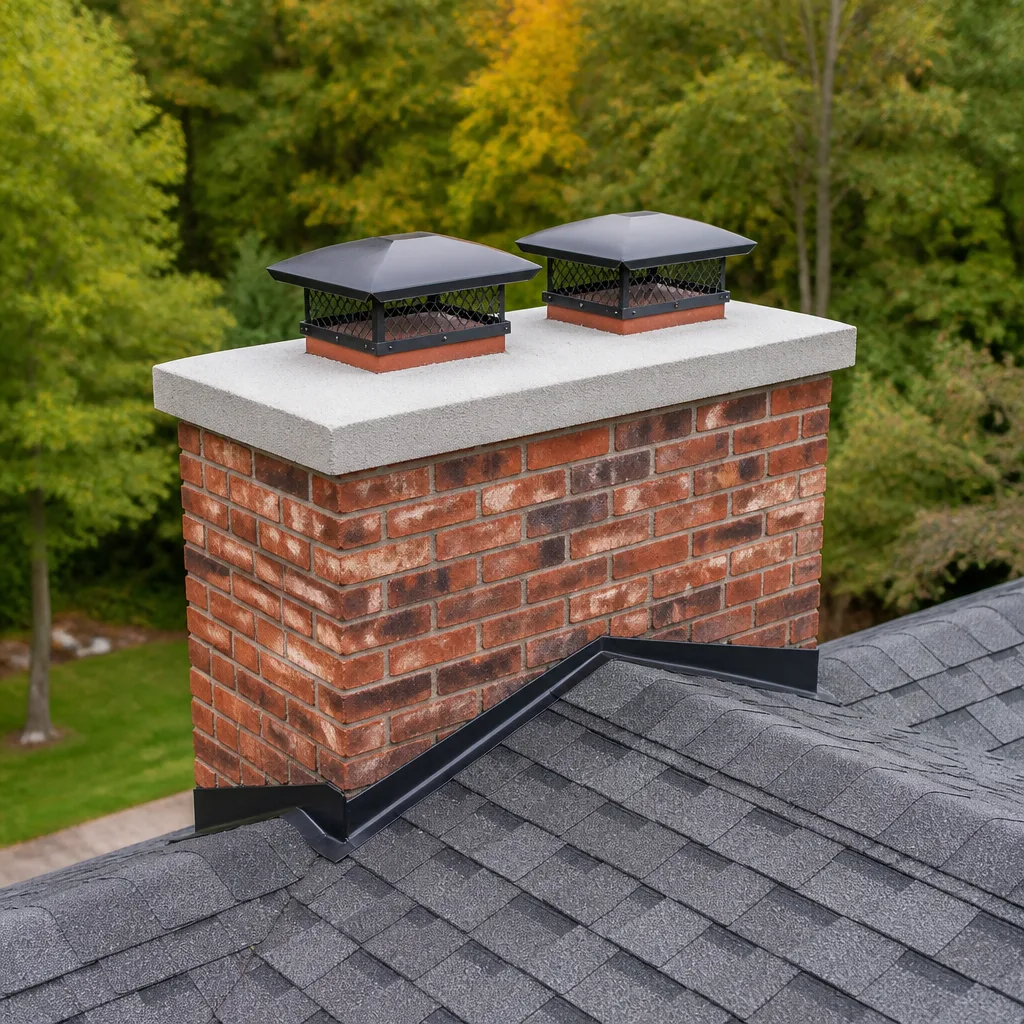 Caps & crowns
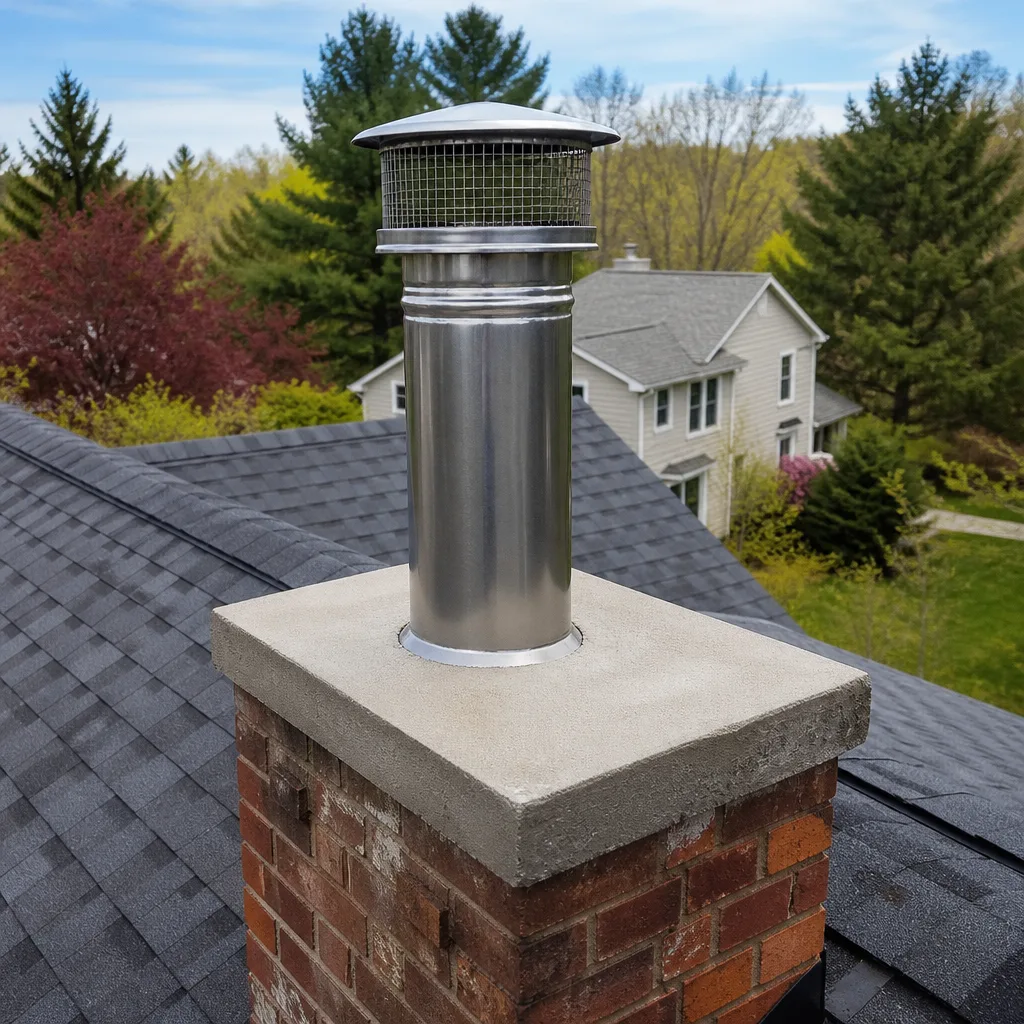 Flue relining
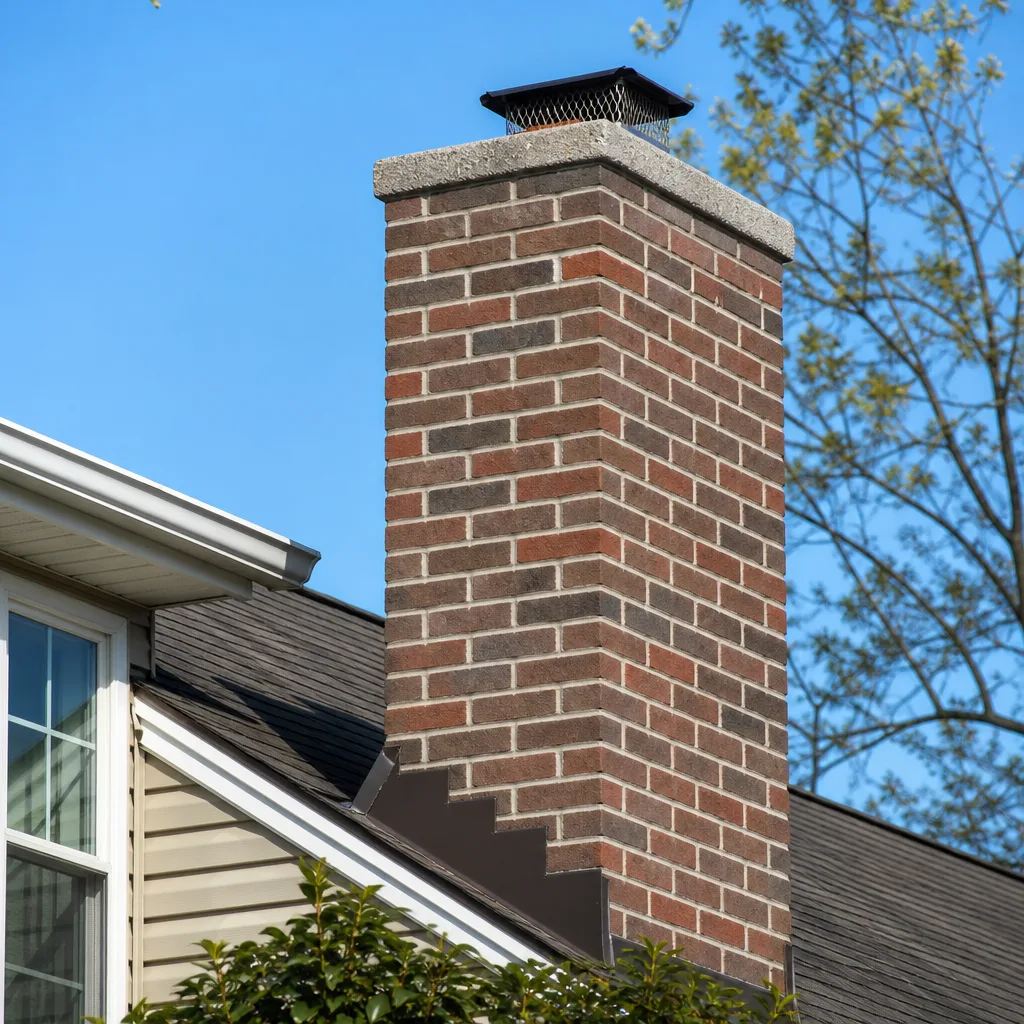 Masonry repair
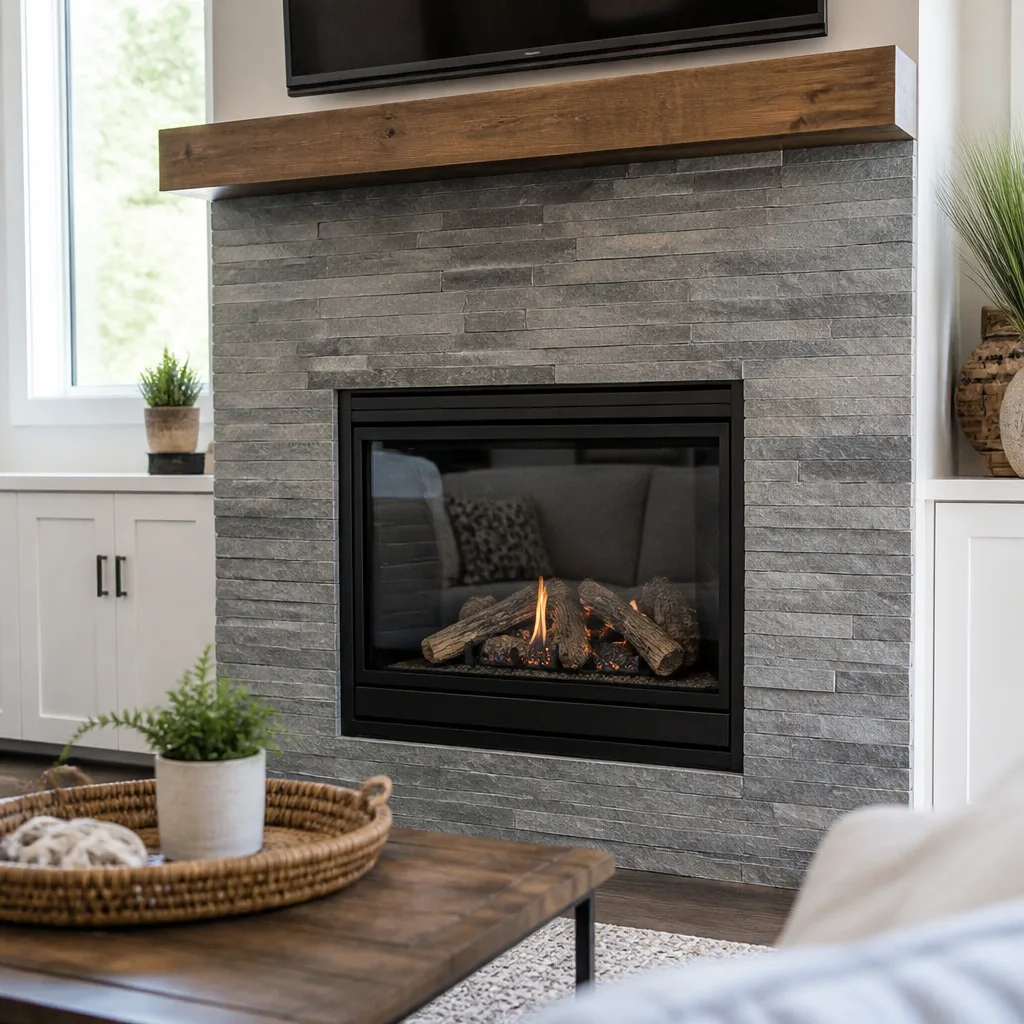 Gas fireplace service
Level 1 sweep and inspection to the NFPA 211 annual standard - flue, crown, cap, and flashing checked and photographed
Chimney sweep logs do not sweep chimneys. They loosen some creosote - which then falls where a brush and vacuum still have to collect it.
Chimney Sweep Maintenance Checklist for Garden Grove Homeowners
Here’s a number most Garden Grove homeowners don’t think about: your chimney sits dormant for roughly nine months every year. That’s nine months of hot, dry Southern California air moving through the flue, nine months for creosote to harden into a glaze that’s harder to remove, and nine months for the damper seal, crown, and mortar joints to quietly degrade without anyone noticing. The worst time to discover your damper seal has rotted out is when you light your first fire of the season, and in Garden Grove, that seal sits untested from March until November. This guide is built for that reality. You’ll learn exactly what to check, when to check it, what you can handle yourself, and when Chimney Sweep services are the only smart call.
Most maintenance checklists you’ll find online were written for homeowners in the Midwest or Northeast who use their fireplaces weekly from October through April. Their priorities are creosote buildup and cold-weather damage. Your priorities in Garden Grove are different: a short burn season, a long hot dormancy, and the specific ways that dry heat and seismic settling affect masonry and components. Here’s the full picture.
Styles & brands we work with
Quick Answer
A chimney maintenance checklist for Garden Grove homeowners should include: an annual professional chimney sweep in early fall before your first fire, a visual inspection of the firebox and damper twice a year, a roof-level check of the crown and cap each fall, monthly visual checks of the chimney exterior during the dry season, and documentation of every service with photographs. The sweep should happen before the burn season starts, not after, and anyone who burns even a handful of fires each winter should follow the same core schedule as a heavy user because creosote formation is not the only variable: dry-season deterioration is the bigger local risk factor.
Table of Contents
- The Seasonal Reality: Garden Grove’s Short Burn Season Changes Everything
- Month-by-Month Maintenance Calendar for Garden Grove
- The Three Components Most Likely to Degrade in a SoCal Chimney
- Homeowner Visual Check: Firebox, Damper, and Crown Without a Ladder
- What You Can Handle Yourself vs. What Needs a Licensed Sweep
- What to Document and Photograph Every Year
- The Overlooked Second Flue: Your Dryer Vent
- Common Mistakes to Avoid
- When to Call a Professional
- Frequently Asked Questions
- The Bottom Line
The Seasonal Reality: Garden Grove’s Short Burn Season Changes Everything
In Garden Grove, the realistic fireplace season runs from mid-November through late February. That’s maybe 12 to 16 weekends where a fire makes sense. The rest of the year, your chimney is essentially a capped vertical shaft sitting in 70-to-95-degree heat with single-digit humidity. What happens during that long dormancy changes the maintenance math entirely.
First, creosote left from the previous season does not simply sit there inert. As it ages through a hot, dry summer, creosote can harden and bond more firmly to the flue walls. What was a soft, brushable deposit in March becomes a brittle, glazed layer by October. That’s one of the reasons a fall sweep in Garden Grove often takes more mechanical effort than a mid-season sweep elsewhere in the country. We’ve cleaned chimneys in this area where the creosote required rotary tools to break loose, not because the homeowner burned excessively, but because the deposits had a full dry season to cure in place.
Second, masonry moves. Garden Grove sits in a seismically active zone, and even small shifts over months can open hairline cracks in the crown or between flue tiles. Those cracks widen through the thermal expansion and contraction of hot summer days and cool desert nights. By fall, a crown that was intact in March may have a spiderweb of fissures that let winter rain directly into the chimney structure. In our experience, crown repair and waterproofing are among the most common late-season findings for chimneys in this part of Orange County.
Third, the damper mechanism is the single most failure-prone component in a seldom-used fireplace. The seal, often a gasket or metal-to-metal seat, sits in a closed position for months. If condensation forms during cool spring mornings or the seal dries and cracks, the damper no longer holds a tight seal. That means when you finally light a fire in November, you could be losing conditioned air up the flue year-round without knowing it. The fix is usually straightforward, but it requires someone who knows what a proper seal looks like and how to test it.
How Fewer Fires Changes the Checklist
Here’s the counterintuitive part: burning less does not mean you need less maintenance. It means you need different maintenance. A heavy user in a cold climate worries about creosote volume. A Garden Grove homeowner worries about creosote aging, structural drying, seismic settling, and component seals that fail from disuse. The checklist below reflects that reality. It’s not shorter; it’s re-sequenced.
If you’re looking for a professional who understands the specific conditions of an Orange County chimney, the Walnut Chimney home page has more detail on how we approach sweeps in this climate. The short version: we treat every fall inspection as the first real examination of a system that’s been dormant for most of the year, and we look at the downtime damage first, before we even think about creosote.
Month-by-Month Maintenance Calendar for Garden Grove
This calendar follows the actual usage pattern of Garden Grove homeowners. You’ll notice that the busiest maintenance months are September and October, not December. That’s intentional. By the time you want a fire, the work should already be done. Here’s the year at a glance.
- September: Schedule your annual professional chimney sweep and inspection. This is the single most important item on the entire checklist. In Garden Grove, don’t wait until the first cold snap. Every chimney service company in Orange County gets slammed in November and December, and appointments slip. September and early October are the sweet spot: temperatures are still warm, the chimney is dry, and you’ll have full availability.
- October: Do your own visual check of the firebox, damper, and chimney exterior (detailed instructions below in the DIY section). If the sweep hasn’t happened yet, this is your last practical window. Also test your damper: open it fully, close it firmly, and listen for a clean seat. Any grinding, resistance, or visible gaps around the frame mean it’s time for a repair before you burn.
- November: First fire of the season. The day before, open the damper and look up the flue with a flashlight. Any debris, animal nests, or heavy creosote you can see from the firebox means you should postpone the fire until a professional takes a look. After the first burn, note any smoke entering the room when the fire is going and the damper is open; that’s a draft problem, not normal in a properly functioning fireplace.
- December through February: Light fires as you wish. Once a month, do a quick check of the chimney exterior from the ground: look for new cracks, missing mortar, or staining. If you burn more than twice a week, consider a mid-season creosote check, but for most Garden Grove users this isn’t necessary.
- March: After your last fire of the season, let the chimney cool for 24 hours, then close the damper completely. Do a firebox check: remove any large ash piles, but leave a thin layer of ash on the firebox floor; it protects the refractory brick. This is also the time to schedule any repairs that came up during the burn season. Waiting until fall means competing with everyone else’s emergency calls.
- April through June: The rainy season is mostly done, but if any rain did fall, check the ceiling and walls near the fireplace for moisture stains. Early summer is also a good time to have a mason look at any crown cracks you spotted during the winter. Dry weather means sealant and waterproofing cures properly.
- July and August: The hottest, driest months. Check the chimney cap from the ground if visible. A damaged or missing cap is a standing invitation to birds, raccoons, and debris. Also, this is the ideal time for any masonry work or Chimney Repair in West Athens style repair work: the structure is bone dry, materials bond well, and there’s no pressure of an approaching burn season.
- Year-round: Keep the area around the fireplace clear of combustibles, never burn anything other than seasoned firewood, and never leave a fire unattended. These habits prevent more chimney problems in Garden Grove than any other single action.
The Three Components Most Likely to Degrade in a SoCal Chimney
Every chimney has certain components that fail faster in certain climates. In Garden Grove, based on the volume of chimneys we’ve inspected across Orange County, three specific parts stand out as the usual suspects. Knowing these are your weak points changes what you look for and when.
1. The Chimney Crown
The crown is the concrete or mortar slab at the very top of the chimney. Its job is simple: shed water away from the flue and the masonry below. But it sits fully exposed to the sun all summer. In Garden Grove’s climate, the thermal expansion and contraction cycle is brutal on standard mortar crowns, which crack far sooner than a properly poured concrete crown with expansion joints. A hairline crack in March becomes a water channel by December, and once water gets into the flue, it deteriorates the mortar between the flue tiles and threatens the entire stack. Crown problems are quiet. You won’t see them until you go up or have a professional do it, but they account for a significant share of the repair work we do each spring.
2. The Damper and Its Seal
The damper is the mechanical gate that separates your living room from the open flue. In a chimney that’s used heavily, the damper gets cycled regularly and its problems show up quickly. In a Garden Grove chimney used a handful of weekends a year, the damper sits in one position for months. The seal can dry and crack. The hinge can stiffen. The edges can warp slightly from repeated temperature cycles. By the time you open it in November, it may no longer close fully, which means warm air escapes in winter and cool air escapes in summer, both of which you pay for on your utility bill. A damper replacement or gasket renewal is one of the cheapest and most impactful repairs a homeowner can make.
3. The Chimney Cap and Spark Arrestor
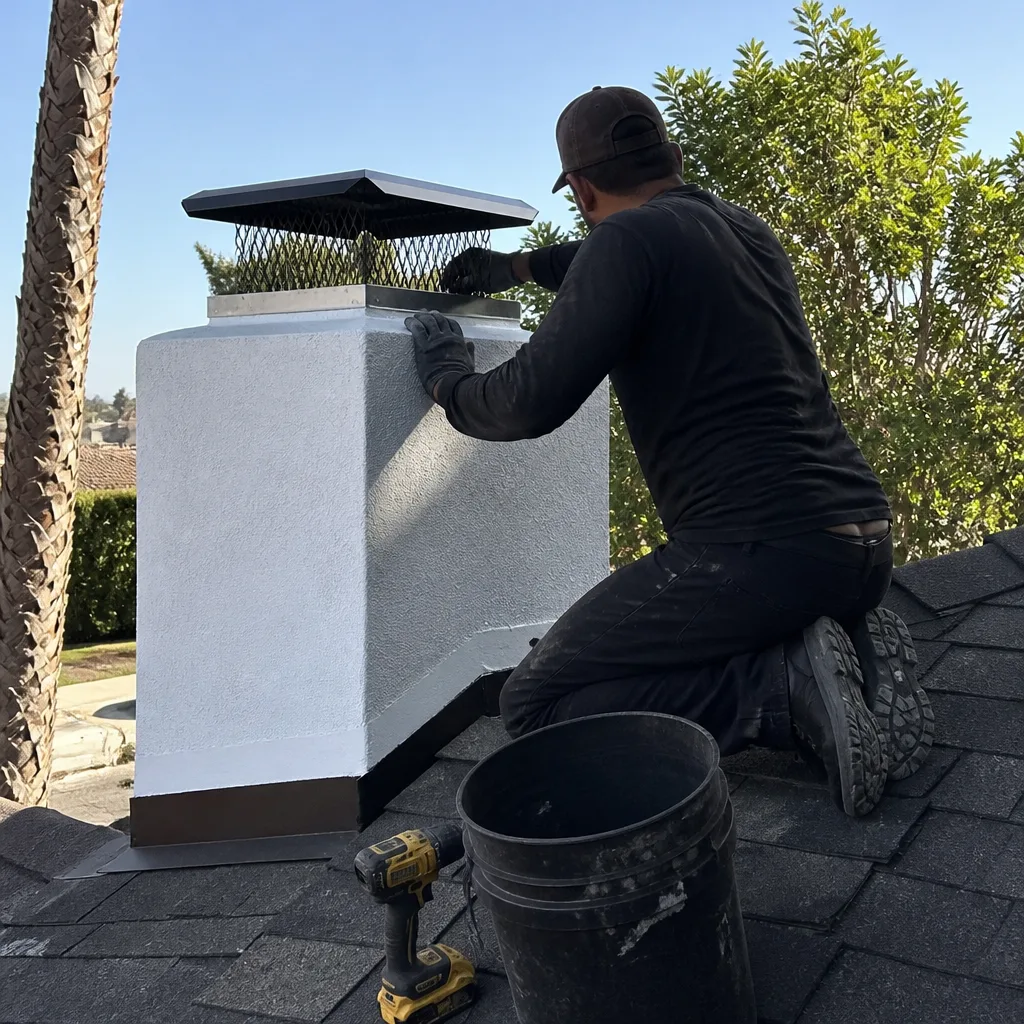
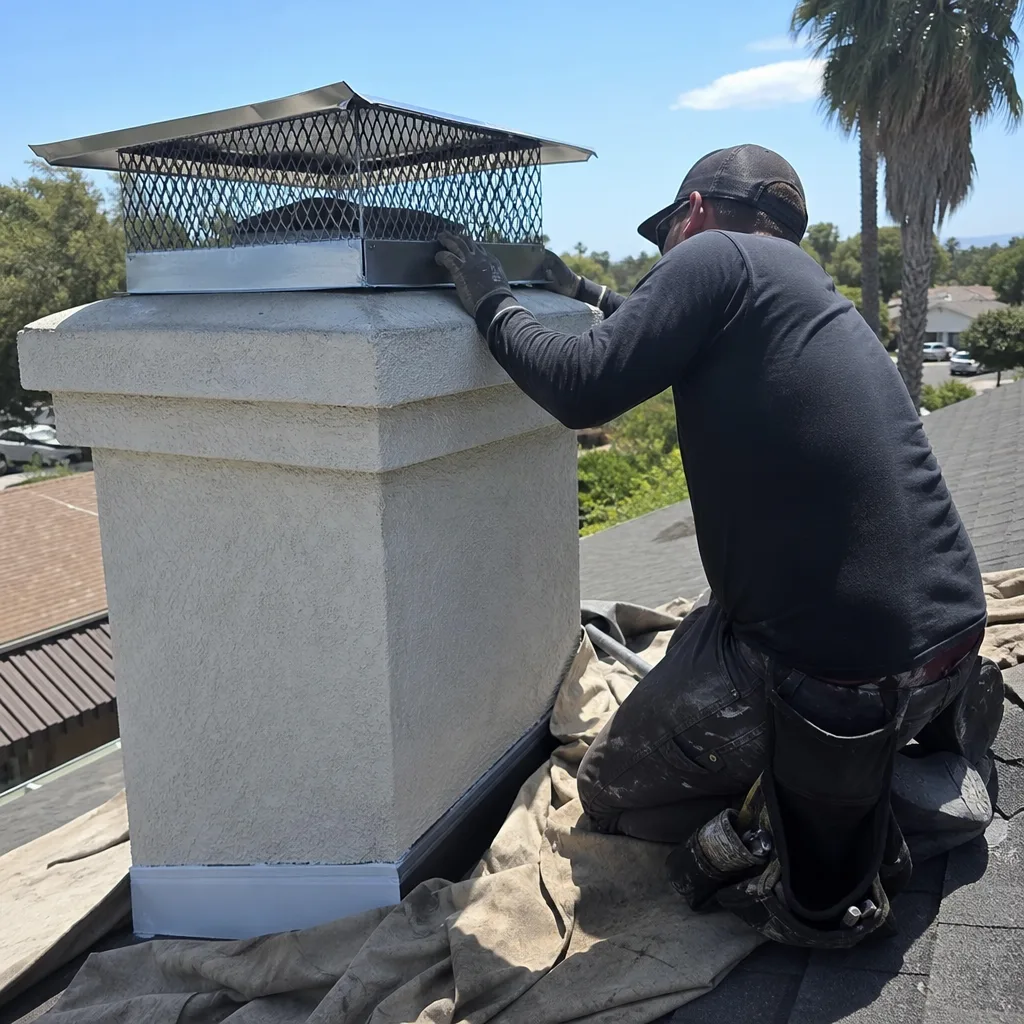
The cap is a simple component with an outsized job. It keeps rain out, animals out, debris out, and contains embers with a spark arrestor screen. In Garden Grove, the dry air and Santa Ana winds mean loose embers are a real fire risk, so a functional spark arrestor isn’t optional, it’s a safety requirement. Caps also rust over time, especially units made of galvanized steel. A rusted cap may look solid from the ground but have pinholes that let rain through. We recommend checking the cap at least twice a year: once in the fall before burn season and once in the spring after the rains. Replacement is inexpensive relative to the water damage it prevents.
Homeowner Visual Check: Firebox, Damper, and Crown Without a Ladder
You don’t need to climb onto your roof to do a meaningful chimney check. Most of the critical early-warning signs are visible from inside your home or from the ground. Here’s a step-by-step process for a thorough visual inspection that any Garden Grove homeowner can complete in about 20 minutes. Do this twice a year: once in early fall before the first fire and once in early spring after the last one.
Step 1: Firebox Check (Interior)
Open the damper fully and shine a bright flashlight up into the flue. Look for any visible creosote buildup: it appears as a black, tar-like coating on the flue walls. If you see more than a thin film, schedule a sweep. Then bring the light down and inspect the firebox itself. Look for cracks in the refractory brick panels, missing mortar joints, or any white staining, which indicates water intrusion. Use a small mirror to check the back wall and the lintel above the firebox opening. Any gaps between the firebox and the surrounding wall are a red flag that heat or smoke could be escaping into the wall cavity.
Step 2: Damper Operation
Open and close the damper several times. It should move smoothly with even resistance. When closed, it should seat evenly around all edges. Use your fingers to feel around the seal while it’s closed (with a cold fireplace). Any gaps larger than the thickness of a nickel, or any visible rust, warping, or pitting on the damper plate, mean it’s time for a professional assessment. A damper that’s stuck in either position should be repaired before anyone lights a fire.
Step 3: Ground-Level Exterior Check
Walk all the way around your home and look at the chimney from every visible angle. Binoculars help. Look for: cracks in the visible masonry, spalling (flaking or chipping) brick or stone, white efflorescence staining, missing or rusted chimney cap, and any vegetation growing out of the masonry, which is a clear sign of moisture penetration. Also check the roofline flashing where the chimney meets the roof: gaps, lifted metal, or missing sealant are common leak points. If anything looks off, note it and schedule a professional inspection.
Step 4: The Flashlight-and-Paper Test
Here’s a practical draft test you can do without any special tools. On a cool morning when the air outside is still, close the damper completely and hold a lightweight piece of paper near the damper opening. If the paper moves, you have an air leak. This is not a perfect test, but it gives you a useful baseline. A properly sealed damper should hold the paper still. If you’re feeling a draft around the fireplace even when the damper is closed, that’s condition loss you’re paying for every month.
What You Can Handle Yourself vs. What Needs a Licensed Sweep
There’s a clear line between homeowner maintenance and professional work, and crossing it in the wrong direction is how chimneys get damaged and people get hurt. Here’s a practical breakdown.
What a Homeowner Can Legitimately Handle
- Visual inspections: All the checks described in the section above are safe for any homeowner to perform. They require no tools beyond a flashlight and maybe binoculars.
- Ash removal: Wait at least 24 hours after the last fire, then remove ash with a metal shovel into a metal container. Leave a thin layer on the firebox floor for brick protection.
- Damper operation: Cycling the damper open and closed is standard maintenance. If it operates smoothly, leave it alone. If it sticks, that’s a professional call.
- Exterior cleaning: Gently washing soot or dust off the exterior masonry with water and a soft brush is fine. Never use a pressure washer; it drives water into the masonry and causes more damage.
- Keeping records: Photographing your chimney annually, keeping service receipts, and writing down observations is something only you can do, and it adds real value to your home.
What Needs a Licensed Professional
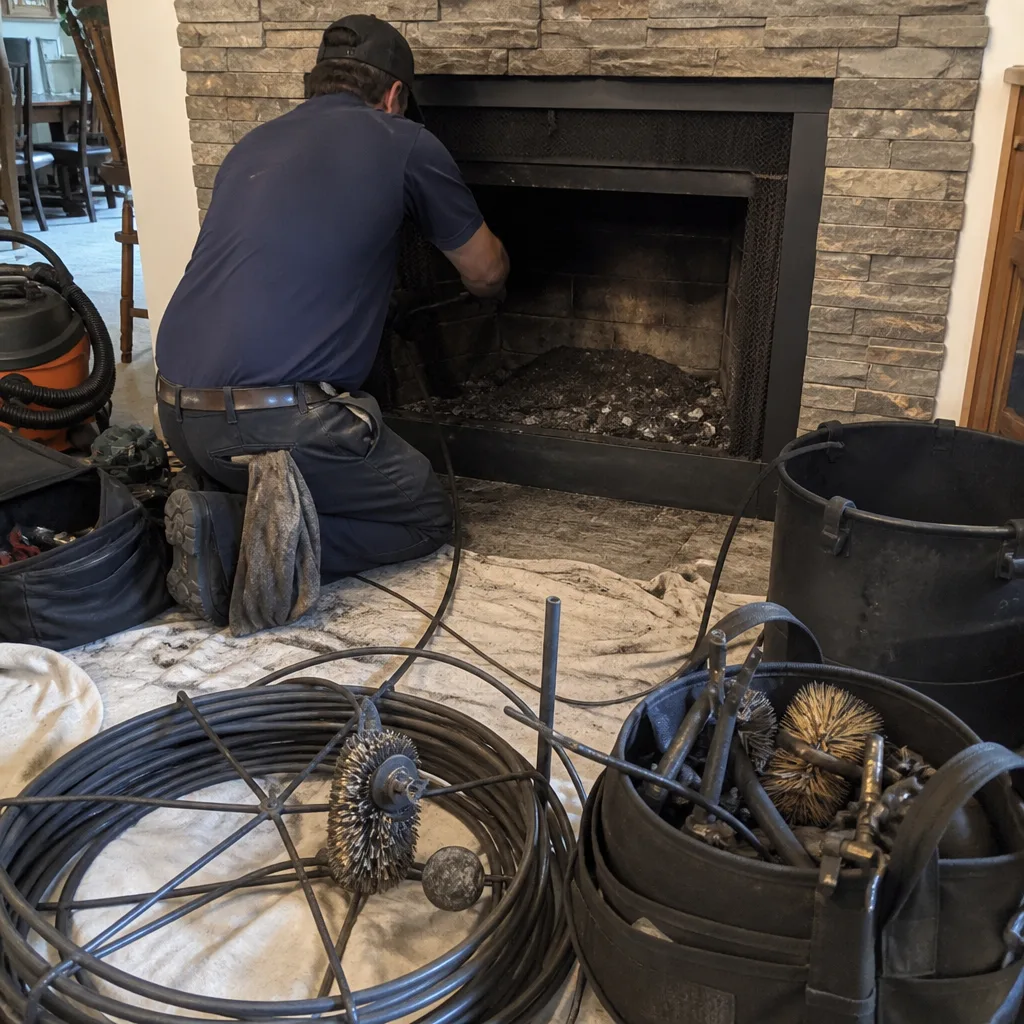
- Chimney sweeping: This involves specialized brushes, rods, and often rotary tools. It’s not a DIY job. Beyond the mess, a proper sweep requires the knowledge to identify flue damage while cleaning, and that damage recognition is the real value of a professional visit.
- Any flue inspection: A camera inspection of the flue interior is the only way to assess the condition of the flue tiles or liner system. This requires professional equipment and trained eyes.
- Crown repair or waterproofing: Working on a chimney crown means being on the roof, often near the edge. It requires proper safety equipment and masonry skills. A botched crown repair leads to water damage that costs thousands to fix.
- Damper repair or replacement: A damper that’s stuck, warped, or no longer sealing needs to be repaired or replaced by someone who understands chimney geometry and draft. A poorly installed damper is worse than no damper at all.
- Masonry repairs, including brick replacement and repointing: The mortar and brickwork of a chimney are structural. Repointing with the wrong mortar mix can do permanent damage to older brick. This is skilled masonry work.
- Any liner work: Flue relining, whether with a flexible system like DuraFlex or a resurfacing material like HeatShield, is strictly professional work. These are code-driven installations that require specialized tools and training. A homeowner should never attempt to install or repair a flue liner.
If you’re not sure which category a problem falls into, err on the side of caution. A professional inspection costs less than a repair, and a repair costs less than a fire. The team at Walnut Chimney performs Chimney Sweep in West Athens and across the broader Garden Grove area, and every sweep includes a full condition assessment with photographic documentation, so you know exactly what was found and what it means.
What to Document and Photograph Every Year
Most homeowners never think about their chimney’s paper trail until they’re selling the house or filing an insurance claim, and by then it’s too late to reconstruct the history. A simple annual documentation routine takes about 15 minutes and gives you a verifiable record that matters in three practical situations: insurance claims after a chimney fire, disclosure requirements during a home sale, and warranty claims on repair work.
Your Annual Chimney Documentation Checklist
- Photograph the firebox: Take clear, well-lit photos of the firebox from the front, showing the side walls, back wall, and floor. Use the same angle each year so you can compare year-over-year condition.
- Photograph the damper: One photo of the damper open, one of it closed. Zoom in on the seal area. This is the component most likely to change between inspections.
- Photograph the chimney exterior: From the ground, photograph the chimney from all four sides. If you have roof access from a window, additional top-down photos of the crown and cap are even better.
- Keep every service record: Every chimney sweep, every repair, every inspection. Write the date, what was done, and what the professional said about condition. If you receive a camera inspection report, keep it.
- Note any changes: After each burn season, write down anything unusual: smoke in the room, odd odors, animals you heard in the chimney, water stains after rain. These notes are more useful than photographs when diagnosing intermittent problems.
- Store everything digitally: A folder on your phone or cloud storage called “Chimney Records” with subfolders by year. The day you need it, you’ll be glad it took 15 minutes a year to maintain.
This record is powerful during a home sale. A buyer presented with five years of documented chimney maintenance and inspection history sees a homeowner who maintained the property properly, and that reduces the chance of a last-minute repair credit negotiation. It also gives you a clear baseline if something changes suddenly: you’ll be able to tell a professional exactly when that crack appeared or when the damper started sticking, and that makes diagnosis faster and more accurate.
The Overlooked Second Flue: Your Dryer Vent
Most chimney checklists ignore the dryer vent, but in Garden Grove’s fire-safety context, that’s a miss. The National Fire Protection Association consistently identifies dryer fires as one of the leading causes of residential fires, and the risk profile is actually higher in climates like ours because dryers work harder during hot months when AC loads push them to full duty cycles. Lint accumulates in the vent run, restricts airflow, and creates exactly the kind of sustained heat that ignites a lint fire.
The logic is simple: if you’re doing a fire-safety inspection on your chimney, do the same for your dryer vent. The two systems are functionally similar: channels that carry hot air and particulates out of your home, channels that can accumulate flammable deposits, channels that most homeowners never look at until there’s a problem. Dryer Vent Cleaning in West Athens and the surrounding Garden Grove area is something we handle as a core service, not an add-on, because the safety case is just as strong as it is for chimney sweeping.
Here’s what to check on your dryer vent twice a year: the exterior vent flap should open freely when the dryer is running, the vent run should be as short and straight as possible, and you should be able to feel strong airflow at the exterior vent. If the flap doesn’t open, or the airflow is weak, or you notice that the dryer is taking longer than it used to dry a load, have the vent cleaned. A dryer fire is a preventable fire, and the prevention costs a fraction of the alternative.
Common Mistakes to Avoid
- Waiting until the first cold snap to schedule a sweep. Every chimney service in Garden Grove books solid from mid-November through December. Scheduling in November means waiting weeks for an appointment, and homeowners who wait often end up burning anyway, which defeats the purpose of the pre-season inspection.
- Assuming light use means no maintenance. As we’ve covered, the long dormancy period in Garden Grove’s climate creates its own set of problem conditions. A chimney that’s used five times a year still needs an annual sweep and inspection.
- Using the fireplace to burn anything other than seasoned firewood. Treated lumber, wrapping paper, cardboard, and especially pine with its high resin content all produce creosote at a much faster rate than properly seasoned hardwood. The shortcut is never worth the risk.
- Ignoring a drafty damper. A damper that doesn’t seal properly is costing you money every month in lost conditioned air, in addition to being a fire hazard if it’s stuck open during a burn. It’s one of the cheapest repairs you can make with the biggest year-round payoff.
- Closing the damper before the fire is completely out. Smoldering embers produce carbon monoxide, which needs an open flue to vent. Closing the damper too early is a carbon monoxide poisoning risk. Wait until only ash remains and there’s no visible smoke or ember glow.
- Power washing the chimney exterior. High-pressure water forces moisture deep into the masonry, and that moisture expands and contracts through Garden Grove’s hot summers and cool desert nights, accelerating crack formation. A soft brush and garden hose are the right tools, if you wash the masonry at all.
- Neglecting the chimney cap. A missing or damaged cap is the direct cause of a surprising share of the chimney problems we find in Orange County: blocked flues from nests, water damage from rain, and embers escaping during Santa Ana wind events. The cap is inexpensive, the damage it prevents is not.
When to Call a Professional
Certain situations should never be managed with a wait-and-see approach. If you see smoke entering the room during a fire, that’s a draft or blockage problem that needs immediate professional attention; do not burn again until it’s resolved. If you smell a strong, persistent odor from the fireplace even when it’s not in use, that’s often a sign of creosote buildup or moisture in the flue, and it calls for an inspection. If you find animal nesting material in the firebox or hear animals in the chimney, don’t attempt to smoke them out; call for humane removal and a proper cap installation. If you see white staining on the exterior masonry or water in the firebox after rain, the crown or flashing has failed and needs repair before the next rain cycle. Walnut Chimney offers free estimates in Garden Grove; call (855) 341-3461 to schedule a chimney sweep, dryer vent cleaning, or repair assessment.
Frequently Asked Questions
Once a year, ideally in September or early October before the burn season starts, even if you only use your fireplace a handful of times each winter. The annual interval is driven by the need to inspect for dry-season damage and seismic settling, not just creosote volume. Call (855) 341-3461 to schedule your annual sweep before the fall rush.
Chimney sweep pricing in Garden Grove typically runs between $150 and $300 for a standard sweep and inspection, depending on the chimney’s condition, height, and accessibility. Repairs are quoted separately based on what the inspection finds. For an exact quote, call (855) 341-3461 for a free estimate.
No. Light use reduces creosote buildup, but it does not reduce the deterioration that occurs during the nine months your chimney sits dormant in Garden Grove’s hot, dry climate. Crown cracks, damper seal failures, and cap damage all occur regardless of how often you burn. The annual inspection is what catches these problems before they become expensive.
Close the damper completely on a cool, still morning and hold a lightweight piece of paper near the opening. If the paper moves, air is leaking through. You can also feel around the edges of the closed damper with your fingers: any gap larger than the thickness of a nickel means the seal is compromised and the damper should be repaired.
Chimney fires are less common here than in cold-climate states with heavy fireplace use, but they are not rare, and the consequences in a dense suburban community like Garden Grove are severe. The bigger year-round risks in this area are water damage from cracked crowns, carbon monoxide from blocked flues, and dryer vent fires, which occur in Southern California at rates comparable to the rest of the country. Call (855) 341-3461 if you have any doubt about your chimney or dryer vent condition.
A sweep removes creosote and debris from the flue. An inspection evaluates the structural and functional condition of the entire chimney system, including the crown, cap, damper, firebox, and flue tiles. A complete service should do both: the sweep makes the inspection possible, and the inspection tells you what repairs are needed. Walnut Chimney combines both in every service call.
The Bottom Line
Your chimney in Garden Grove lives a different life than most national maintenance guides assume. It works for three or four months, then sits in the dry Southern California heat for the rest of the year. That pattern makes the annual fall inspection more important than any other single action, and it makes the late-summer scheduling window the smartest move you can make. Check the firebox and damper twice a year, check the exterior monthly during the dry season, document everything, and never ignore a draft or a water stain. A well-maintained chimney is not a luxury; it’s the difference between a safe, efficient fireplace and a quiet hazard waiting for the wrong moment. If you’re in the Garden Grove area and want a professional to handle the full checklist, see our Choosing the Right Chimney Cleaning Brand: A Buyer’s Guide for Garden Grove or call (855) 341-3461.
Written by the team at Walnut Chimney, serving Garden Grove since 2017. Explore more guides & resources.
See the difference
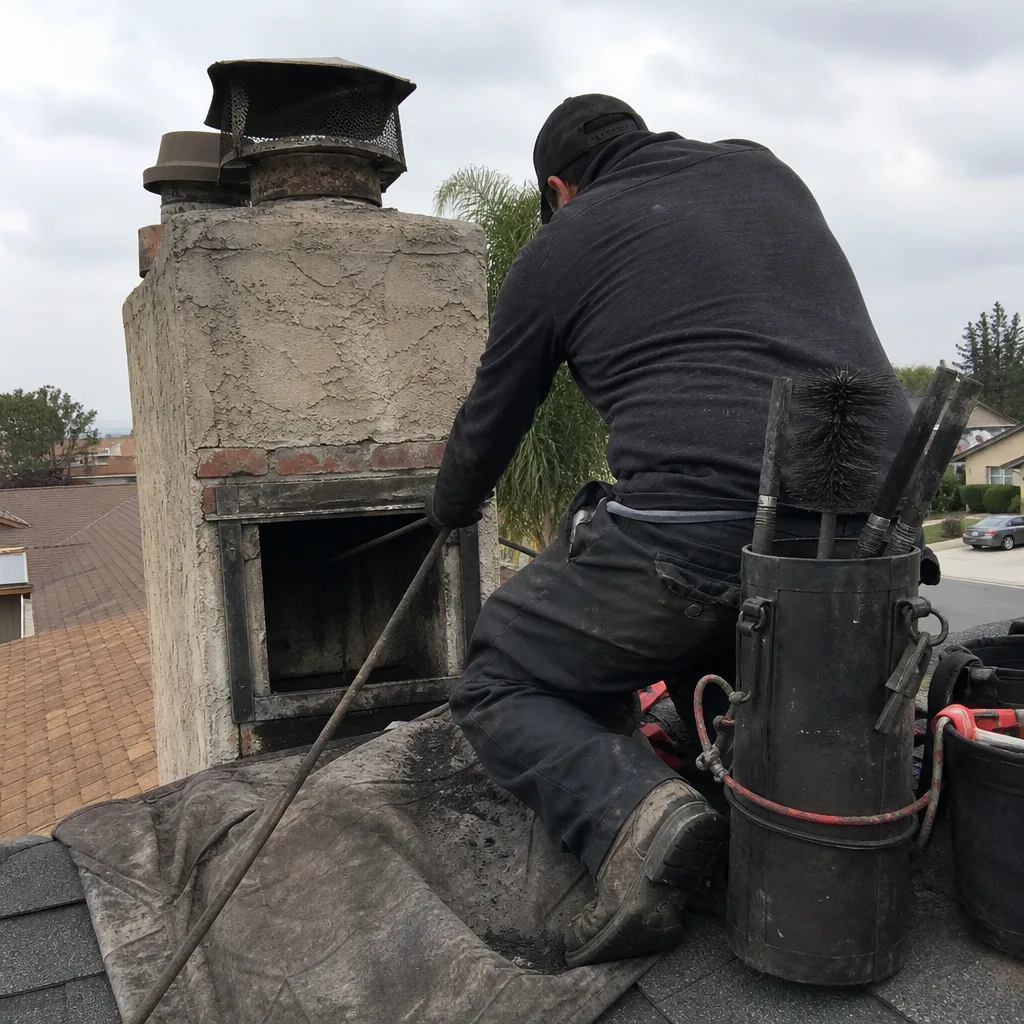 Before
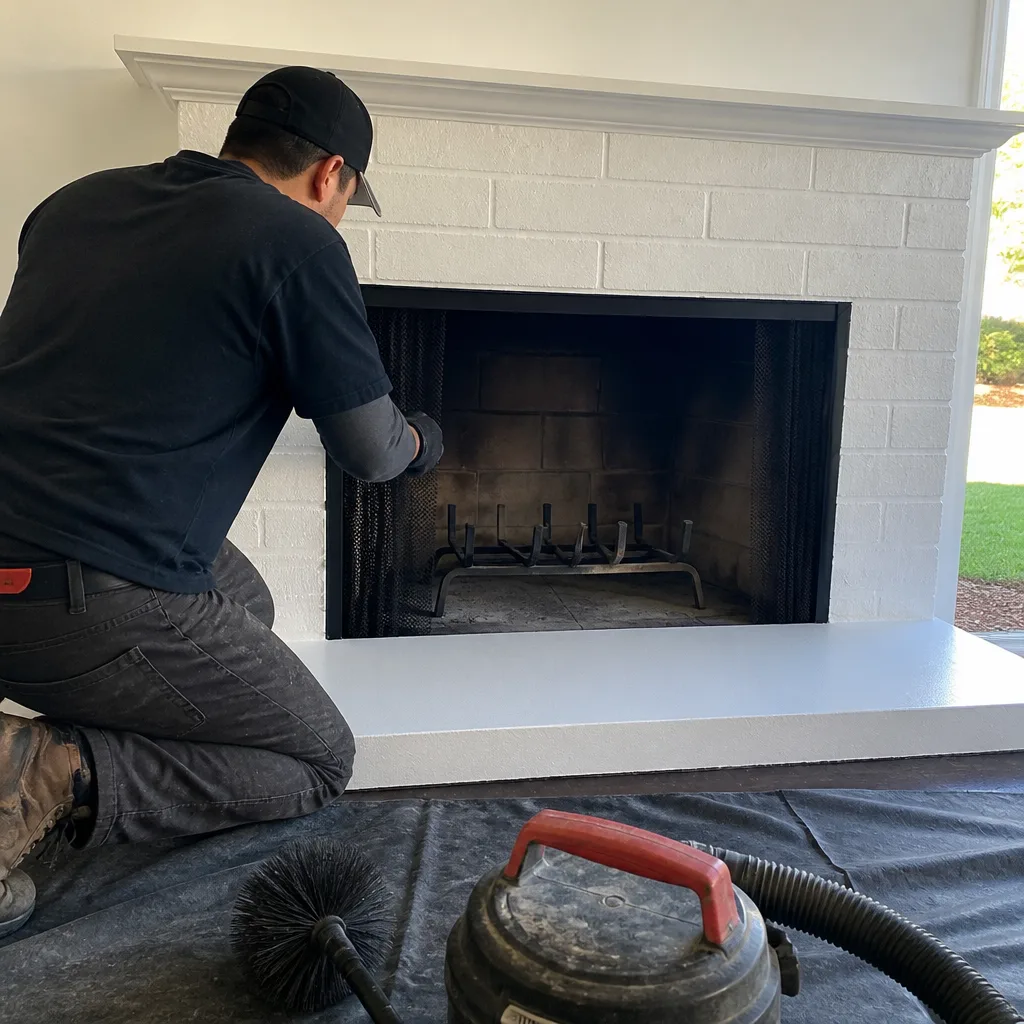 After
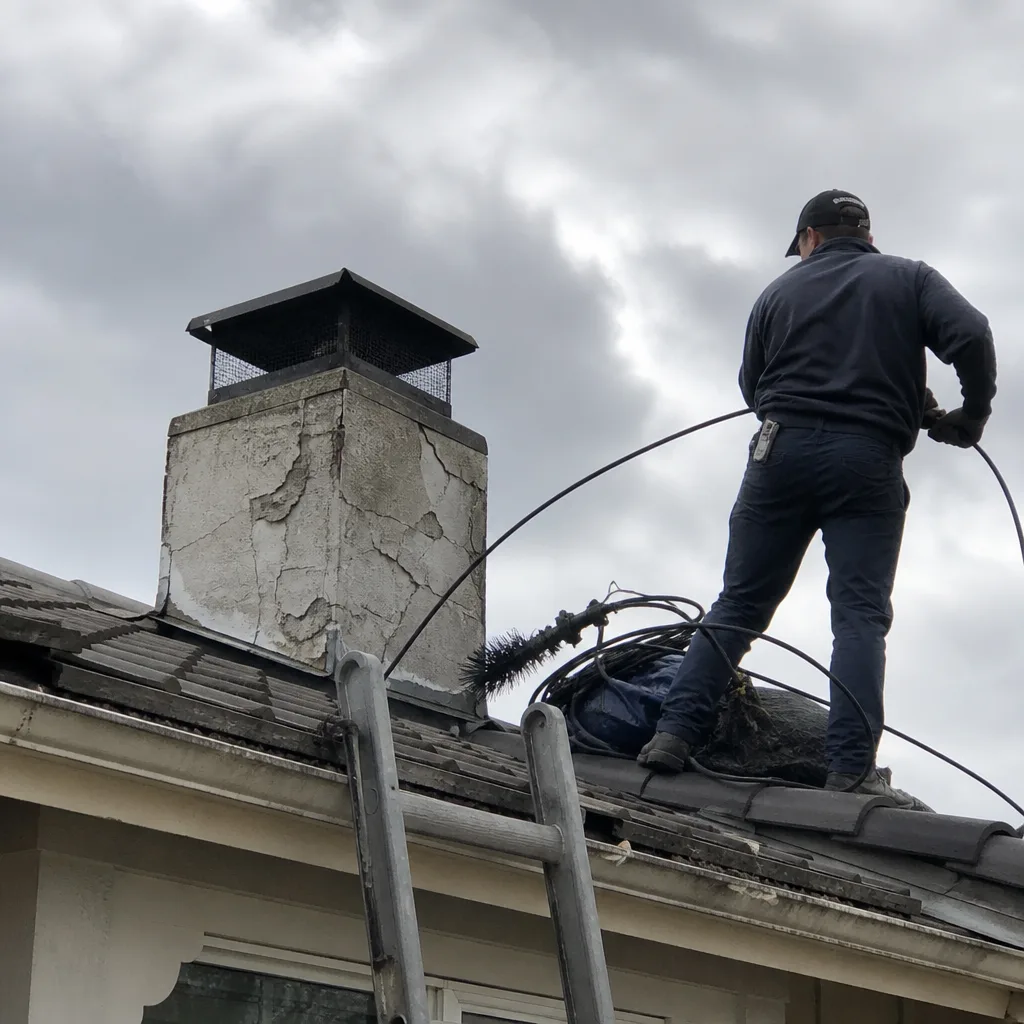 Before
 After
 Before
 After