
Last updated October 31, 2026
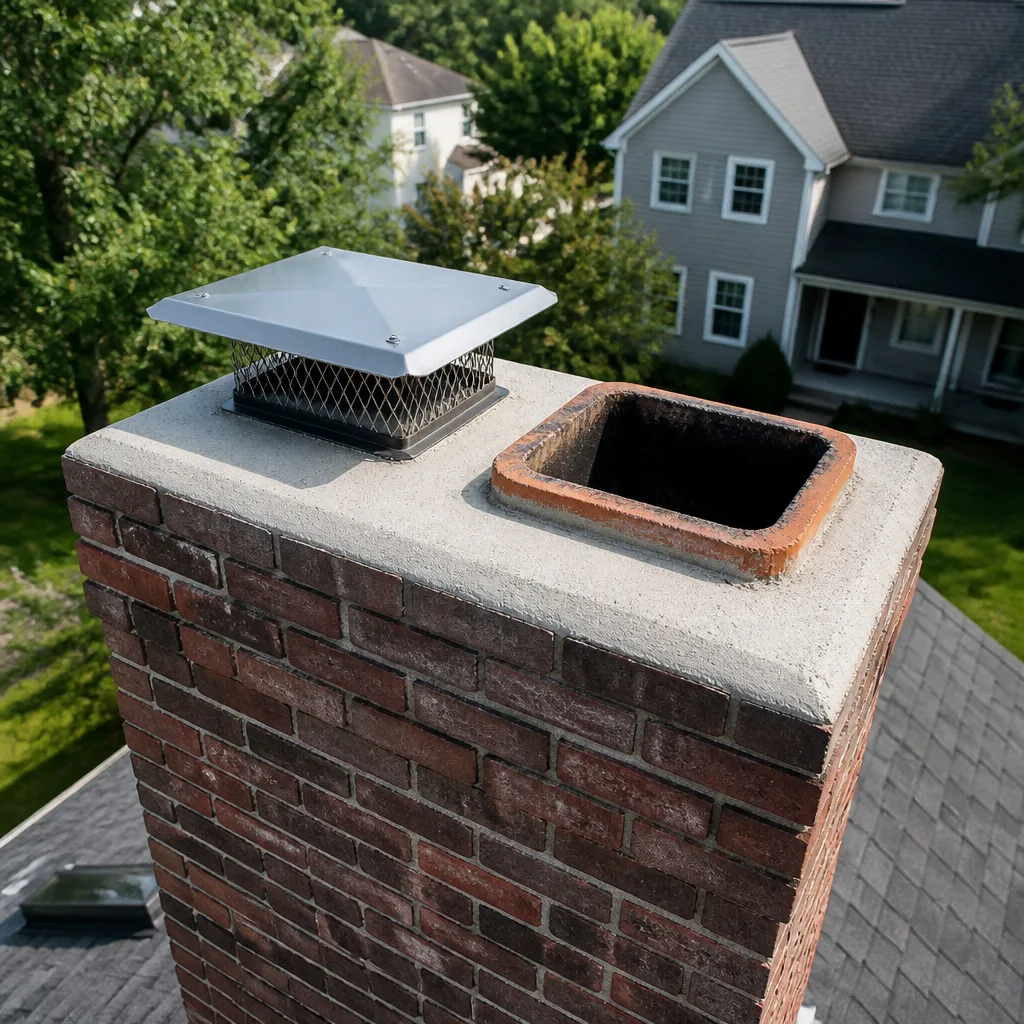 Sweep & inspection
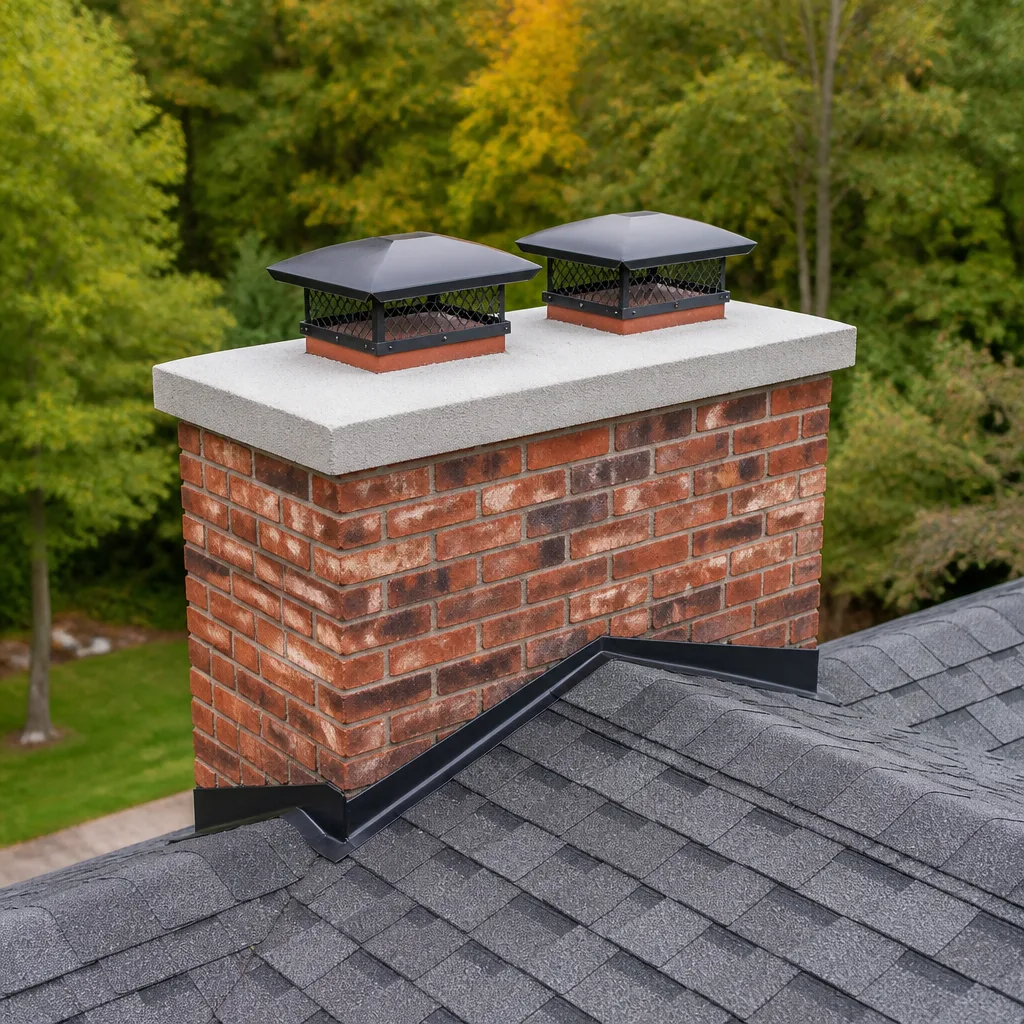 Caps & crowns
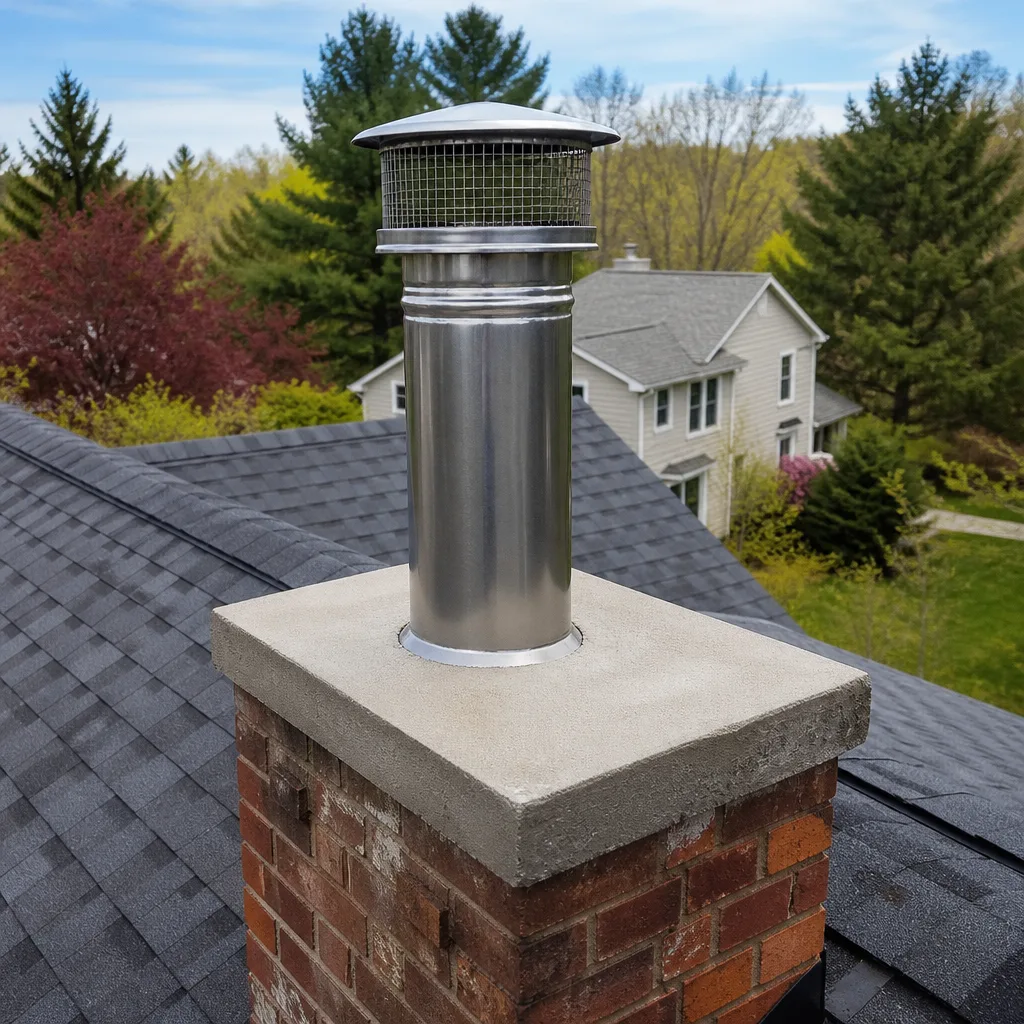 Flue relining
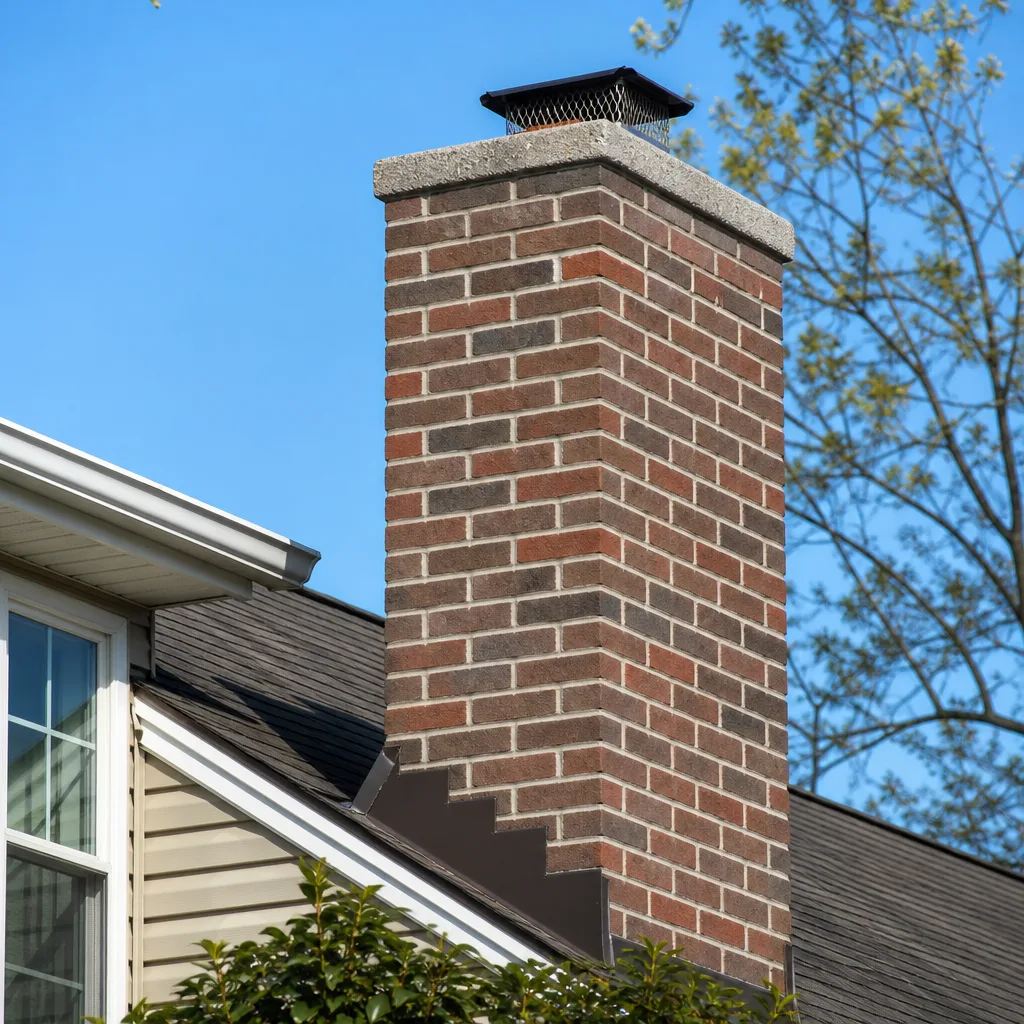 Masonry repair
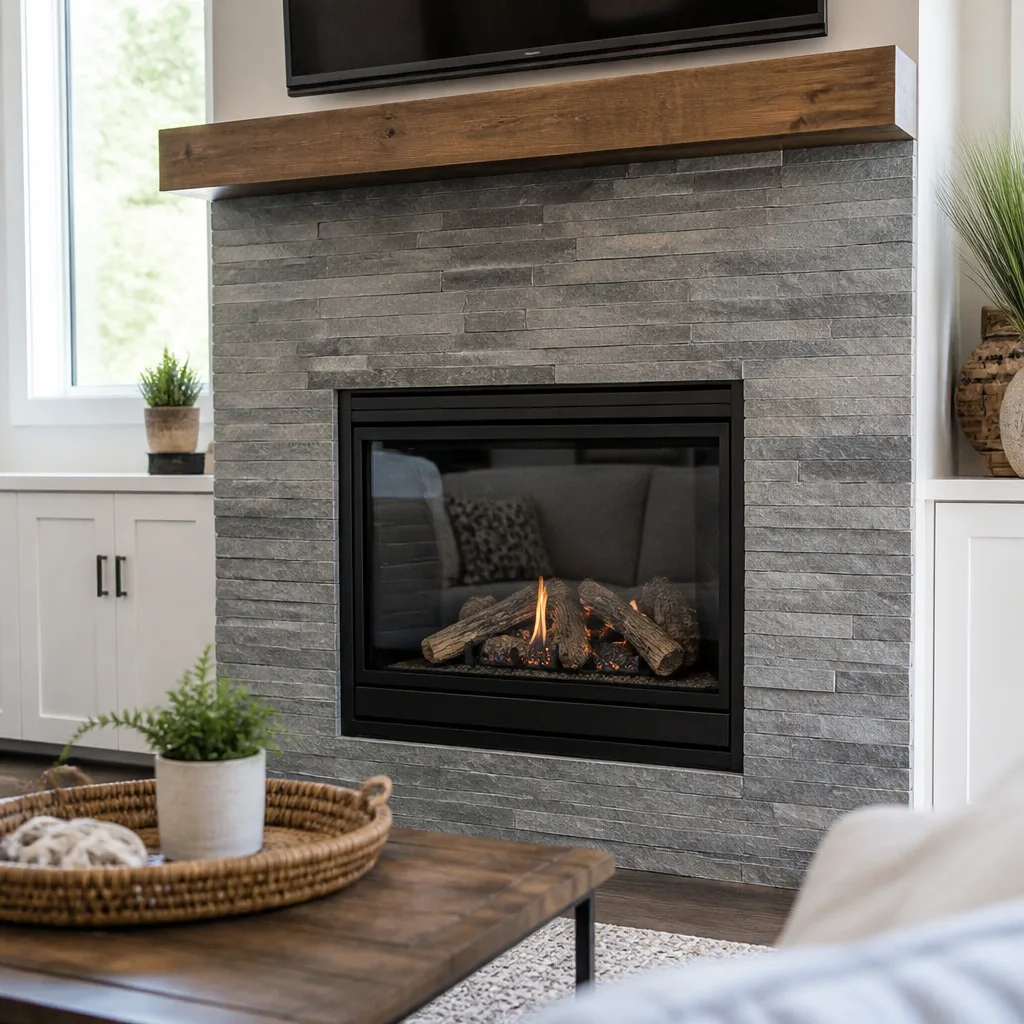 Gas fireplace service
Level 1 sweep and inspection to the NFPA 211 annual standard - flue, crown, cap, and flashing checked and photographed
Chimney sweep logs do not sweep chimneys. They loosen some creosote - which then falls where a brush and vacuum still have to collect it.
The Complete Guide to Chimney Cleaning in Garden Grove
A chimney used only eight times a year can still fail a safety inspection, and in Garden Grove, the reason is almost never creosote. Homeowners in mild climates tend to assume that infrequent fires mean infrequent maintenance. That assumption is exactly what makes Southern California chimneys quietly dangerous. This guide explains what actually accumulates inside a Garden Grove flue, why the cleaning protocol here differs from what you’d read in a guide written for Michigan or Minnesota, and what a full-stack cleaning visit should include before anyone hands you an invoice. For seasonal chimney cleaning care for Garden Grove homeowners, timing your maintenance right matters as much as the service itself.
Quick Answer
Chimney cleaning in Garden Grove should happen once a year for wood-burning fireplaces and every one to two years for gas log sets, even if you rarely use them. The primary threats in this climate are bird and rodent nesting debris, Stage 1 creosote from short, cool fires, and moisture-driven mortar deterioration from coastal humidity. A proper cleaning removes blockages, documents flue condition with camera inspection, and verifies the chimney is safe to operate before the next burn season.
Styles & brands we work with
Table of Contents
- What Actually Accumulates in a Garden Grove Chimney
- Why Low-Use Chimneys Fail More Often Than You’d Think
- Wood-Burning vs. Gas Log Chimneys: Different Problems, Same Flue
- What a Full-Stack Cleaning Visit Covers
- What a Sweep-Only Service Skips
- The Birds and Rodents That Colonize Garden Grove Flues
- Coastal Humidity and Mortar Spalling: The Hidden Structural Issue
- Cleaning Methods: Brush Sweeping vs. Rotary Systems vs. Chemical Treatment
What Actually Accumulates in a Garden Grove Chimney
When we inspect chimneys in Garden Grove neighborhoods like West Garden Grove, Eastgate, and the areas off Chapman Avenue, we consistently find a specific debris profile that has almost nothing to do with heavy fireplace use. The most common finding is a combination of bird nesting material, spider webbing, dust, and a thin, flaky layer of Stage 1 creosote. Stage 1 creosote is the earliest form of creosote buildup: a fine, sooty powder that forms during low-temperature fires. It’s far less flammable than the thick, tarry Stage 3 glaze creosote common in cold-climate chimneys, but it still restricts airflow and can ignite under the right conditions.
What surprises most homeowners is the sheer volume of non-combustion debris. A chimney cap with a damaged or missing screen becomes an open invitation. In Garden Grove, where the weather is mild and chimneys sit dormant for months, birds find flues to be ideal nesting cavities. Roof rats, which are widespread throughout Orange County, climb stucco walls and roof lines to access chimney openings. What they leave behind includes twigs, dried grasses, droppings, food remnants, and in the case of rats, gnawed insulation material.
A cleaning in Garden Grove is therefore less about scraping off thick creosote and more about removing organic blockages and verifying that the flue liner is intact. The two jobs require different tools, different inspection points, and a different mindset than what a sweep in a cold-climate region brings to the job.
Why Low-Use Chimneys Fail More Often Than You’d Think
The intuitive assumption is that a chimney used rarely stays clean. The opposite tends to be true in Garden Grove’s climate. Here’s why: fire is what keeps a chimney dry and clear. Every time you burn wood, the heat drives moisture out of the masonry and keeps small insect colonies from establishing. When a chimney goes unused for eight or nine months, it becomes a stable, sheltered vertical cavity that animals and insects treat as protected real estate.
We’ve pulled fully formed bird nests out of Garden Grove chimneys that had hosted a single fire the previous winter. The nest was built in March, after the last burn. By November, the chimney was fully blocked. The homeowner had no idea because the fireplace doors were closed and the damper sealed. The only reason they called us was a faint smell coming from the firebox. That’s a common story, not an edge case.
Moisture is the other issue. A chimney that never warms up never dries out. Garden Grove sits roughly ten miles from the coast, close enough to receive persistent marine-layer humidity, particularly in late spring and early summer. That moisture penetrates the porous mortar joints and brick surfaces. Over time it causes spalling: the flaking and crumbling of masonry that happens when trapped water expands and contracts with temperature changes. A low-use chimney is a wet chimney, and a wet chimney deteriorates faster than one used regularly.
Wood-Burning vs. Gas Log Chimneys: Different Problems, Same Flue
Many Garden Grove homes built from the 1960s through the 1980s were originally constructed with wood-burning fireplaces. Over the years, a significant number of those fireplaces were converted to gas log sets. The conversion process often left the original clay tile flue in place, which creates a specific set of maintenance requirements most homeowners never hear about.
Wood-burning chimneys produce creosote and soot that need mechanical brushing. The buildup is visible and predictable. Gas log chimneys produce a different kind of residue: a fine, acidic soot that combines with moisture to create a mildly corrosive coating on the flue liner. Gas burns cooler and produces more water vapor than wood, so moisture condenses inside the flue. That moisture traps soot particles against the liner walls. Over time, the liner can develop hairline cracks from this chemical exposure.
Here’s the part that catches people off guard: gas flues in Southern California are often dirtier than wood flues when we inspect them. This is because gas log homeowners assume the fireplace requires no maintenance. They never schedule a cleaning. The flue goes five, ten, fifteen years without an inspection. When we finally look inside, we find soot buildup, spider egg sacs, dust accumulation, and occasionally the beginnings of liner deterioration. Gas logs don’t create the dramatic creosote fires you read about, but a damaged flue with a gas appliance venting into it still presents a carbon monoxide risk.
Gas Log Cleaning Checklist
- Remove and inspect the gas log set for soot accumulation and burner port blockage.
- Vacuum the smoke chamber and firebox to remove loose soot and debris.
- Brush the flue liner to remove acidic soot coating.
- Inspect the damper to confirm it is locked in the correct open position for gas operation.
- Run a camera up the flue to check for liner cracks, gaps, or missing mortar joints.
- Verify the chimney cap and spark arrestor are intact and screened against bird entry.
What a Full-Stack Cleaning Visit Covers
A full-stack cleaning means the technician works from the firebox to the cap, addressing every component between those two points. This is the standard Walnut Chimney applies to every chimney sweep in Garden Grove, whether the fireplace is used weekly or once a year. The process takes approximately ninety minutes to two hours for a standard single-flue chimney, longer if there is significant blockage or if repairs are identified mid-service.
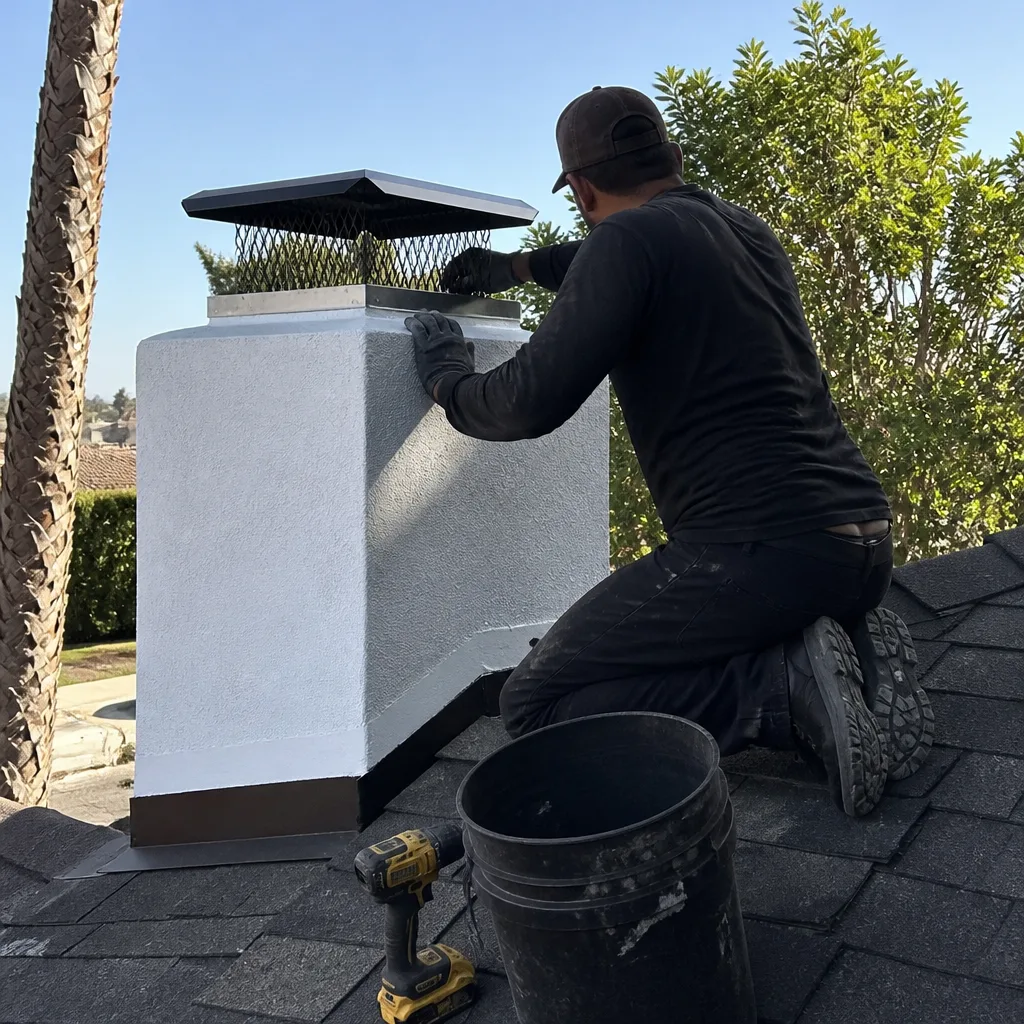
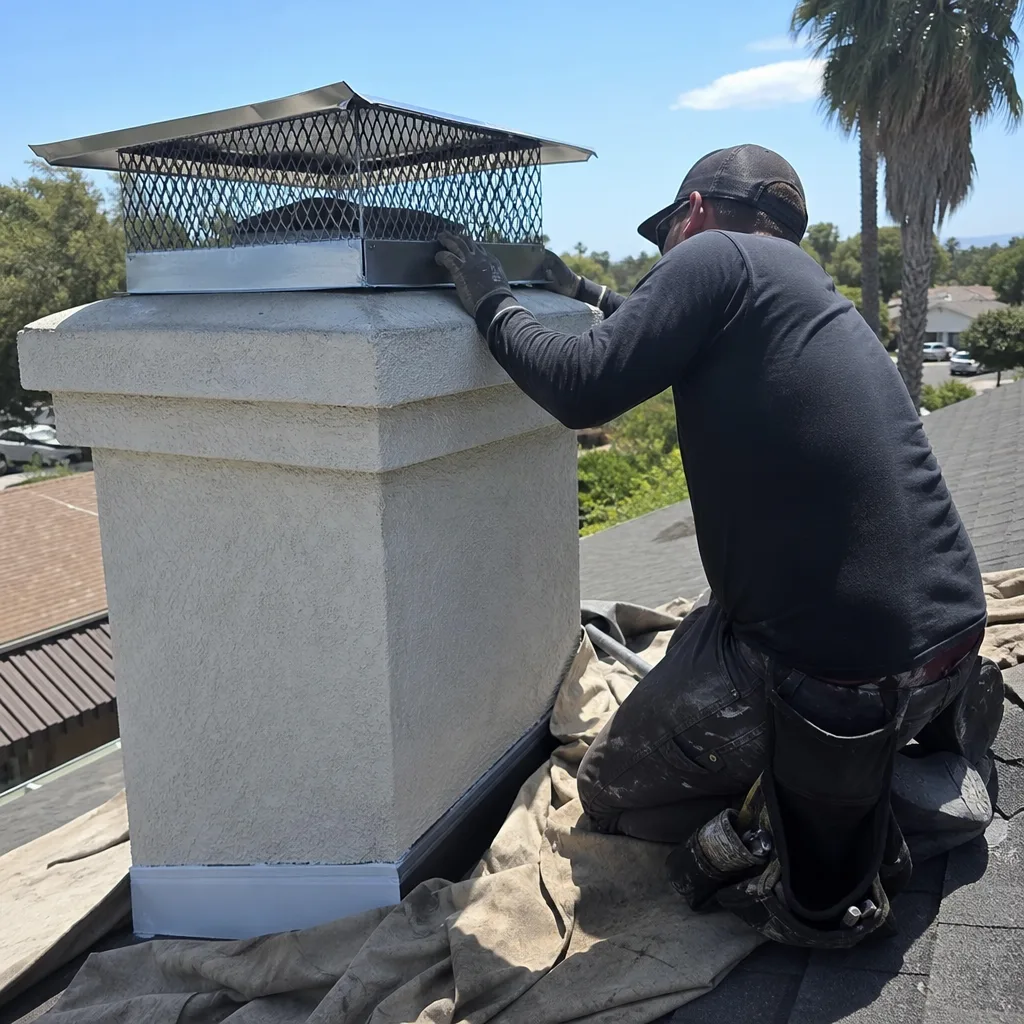
The cleaning begins at the top of the chimney with a cap and crown inspection. The crown is the masonry surface at the top of the chimney that seals the structure against water. Crown cracks are the number one entry point for moisture in Garden Grove chimneys. If the crown is cracked, water enters the flue chase and starts degrading the mortar from above. The technician checks the cap screen, the flashing where the chimney meets the roof, and the condition of any exposed mortar joints.
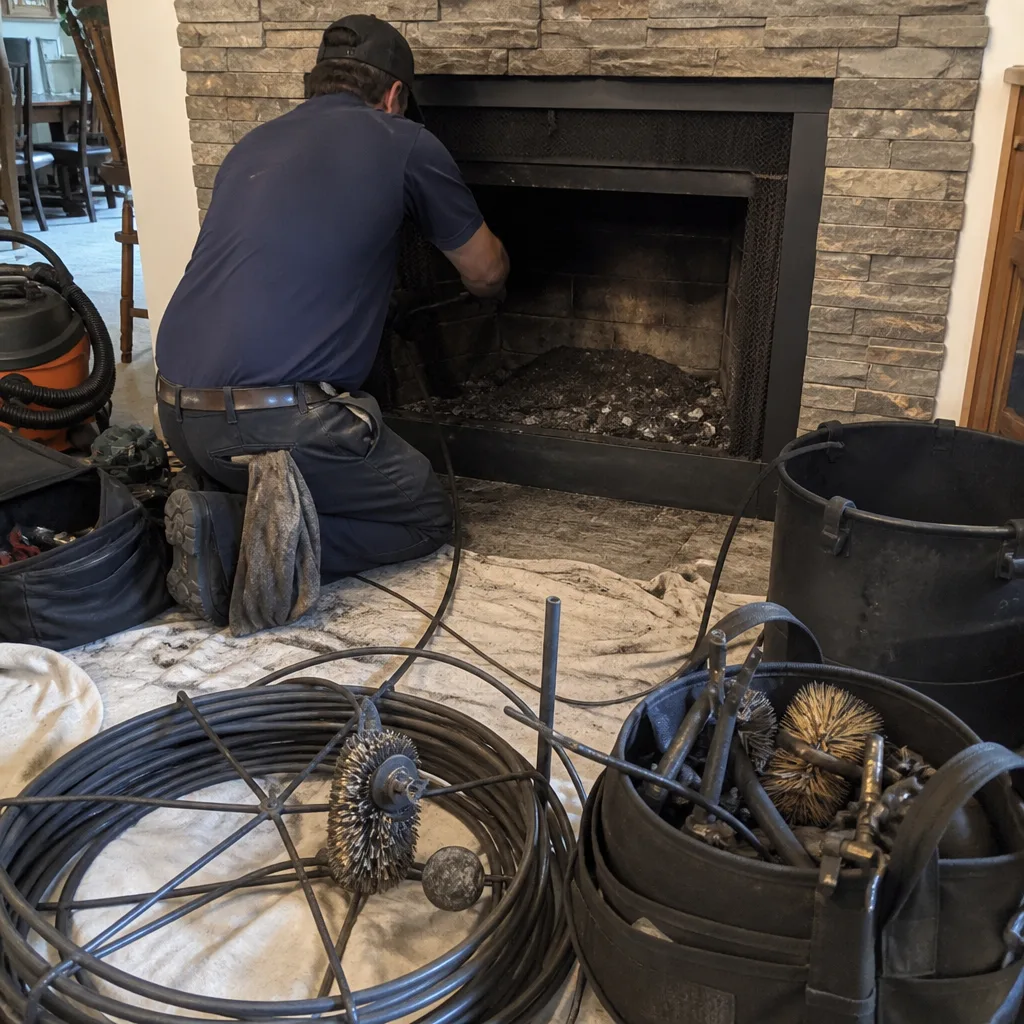
The next step is the flue interior. Using a properly sized wire brush for a clay tile liner or a compatible brush for a metal liner, the technician scrubs the full length of the flue to dislodge creosote, soot, nesting material, and any other debris. The loosened material falls to the firebox, where it is contained and vacuumed out. Many sweeps stop here. A full-stack cleaning doesn’t.
After brushing, the smoke chamber and smoke shelf are inspected and cleaned. These are the angled transition areas between the firebox and the flue, and they are notorious for trapping creosote and debris. If these areas are not cleaned, the chimney is not truly clean. Finally, the technician runs a camera inspection to document the flue’s condition. The camera reveals liner cracks, separated clay tile joints, and areas where the mortar has failed. This footage belongs to the homeowner. It’s the evidence that tells you whether the chimney needs repair or is safe for another season.
What a Sweep-Only Service Skips
The term “chimney sweep” creates a specific mental picture: a person with brushes and a vacuum who cleans the flue and leaves. That describes a sweep-only service, and it’s the most common model in the industry. It’s also incomplete. A sweep-only visit typically skips three things that matter for long-term chimney safety.
First, it skips the camera inspection. Without a camera run, you have no documentation of what the flue looks like after the brushing. If a liner crack exists behind a layer of soot, the brush may not reveal it. The camera does. Second, a sweep-only service often skips the smoke chamber. This is the area above the damper and below the flue, and it’s the most common hiding place for years of accumulated creosote and nesting debris. Third, a sweep-only visit frequently skips the cap and crown assessment, because the sweep assumes that’s a repair department’s job.
Walnut Chimney takes a different approach. We treat the sweep, the inspection, and any needed repair as one continuous service call. Our technicians work with professional-grade materials from manufacturers like Olympia Chimney, Famco, and Copperfield to source replacement caps, dampers, and venting components. We repair what we find, with the right brand for the job. That means the cap that was loose on your flue gets replaced or resealed during the same visit, not flagged for a follow-up appointment with a different contractor. From the firebox to the cap, the job is handled in one scope of work.
The Birds and Rodents That Colonize Garden Grove Flues
Garden Grove’s specific animal population creates a specific chimney blockage profile. Understanding what species you’re dealing with helps homeowners recognize the warning signs early. The three most common chimney intruders in this part of Orange County are chimney swifts, European starlings, and roof rats.
Chimney swifts are migratory birds that historically nested in hollow trees. Chimneys mimic hollow trees perfectly, and swifts become attached to specific chimneys, returning year after year. Their nests are small, cup-shaped structures built from twigs and glued to the chimney wall with saliva. By the time chicks fledge, the nest contains concentrated droppings and feather debris. Swift nests are protected under federal law during nesting season, so if you hear bird sounds in your chimney between March and August, the cleanup has to wait until the birds leave on their own. A screened cap prevents the problem entirely.
European starlings are aggressive cavity nesters that build large, bulky nests from dried grass, leaves, and human debris like string and plastic. A starling nest can fill a flue opening completely in under a week. Starlings in Garden Grove are active throughout spring and early summer, and they will attempt to nest anywhere a chimney cap is missing or damaged.
Roof rats are the most damaging intruder. They use chimneys as travel corridors between roof spaces and wall voids. We’ve found rat nests built entirely from shredded fiberglass insulation, which the rats pulled from attic spaces and dragged down the flue. Rat droppings inside a chimney are a health concern, and their chewing can damage damper hardware and even flue liners. A stainless steel cap with proper screening is the only reliable exclusion method.
Signs of an Animal in Your Garden Grove Chimney
- Scratching or fluttering sounds coming from behind the fireplace wall, particularly at dawn and dusk.
- A strong ammonia smell near the firebox, which indicates accumulated droppings.
- Visible nesting material hanging down into the fireplace opening.
- Flies or small insects gathering around the hearth, which often hatch from debris inside the chimney.
- Grease marks or dark rub marks on the roof near the chimney, indicating rat traffic.
Coastal Humidity and Mortar Spalling: The Hidden Structural Issue
Garden Grove sits in the coastal plain of Orange County, about ten miles inland from Huntington Beach and roughly fifteen miles from Long Beach. That geography means the air carries moisture from the Pacific Ocean, especially during the May Gray and June Gloom periods when the marine layer sits over the basin for days at a time. Chimneys made of brick and mortar absorb that moisture continuously. When combined with the natural temperature swings between day and night, the moisture causes the mortar to expand and contract, which eventually breaks down the bond between bricks.
Spalling is the term for what happens next: the brick faces begin to flake, pop, and fall away. We see this most often on the upper third of chimneys in Garden Grove, where the structure is fully exposed to weather. Once spalling starts, it accelerates. Each lost brick face exposes more porous material to the elements. If the crown is cracked, water enters from above and attacks the mortar joints from inside the flue chase.
The connection to chimney cleaning is this: a cleaning visit is the only time most homeowners get any kind of structural assessment of their chimney. If you never clean, you never inspect. If you never inspect, minor crown cracks become major masonry repairs. A clean chimney is a measurable thing, and part of what a proper cleaning measures is the structural integrity of the masonry itself.
Cleaning Methods: Brush Sweeping vs. Rotary Systems vs. Chemical Treatment
There are three primary methods for cleaning a chimney, and the right choice depends on what’s inside the flue. A knowledgeable technician will tell you why they chose the method they did. A less transparent operation will brush everything and call it done.
Wire brush sweeping is the standard approach for Stage 1 and Stage 2 creosote and for removing loose debris. The technician uses a brush sized specifically to the flue dimensions. In Garden Grove, where most chimneys have standard clay tile liners, a wire brush is usually sufficient for routine maintenance. The brush scrubs the liner walls and dislodges material, which falls to the firebox for vacuum removal.
Rotary cleaning systems use a spinning head attached to flexible rods and driven by a drill. This is more aggressive than a hand brush and is appropriate for Stage 2 creosote that has hardened into a tar-like coating, or for flues with significant soot buildup from gas appliances. Rotary systems also do a better job of cleaning the mortar joints between clay tiles, where creosote tends to accumulate. For chimneys in Garden Grove that haven’t been cleaned in years and have developed a hard glaze, a rotary system is often the right call.
Chemical treatments are sometimes used as a supplement, not a replacement, to mechanical cleaning. Products exist that alter creosote chemistry and make it easier to remove during the next brushing. These can be useful for chimneys with persistent Stage 2 or Stage 3 creosote, but they are never a substitute for physically removing the debris. Any company that sells you a chemical log and tells you it cleans your chimney is misleading you. The chemical breaks down creosote, but the material still has to be brushed and vacuumed out.
Key Takeaways
- Garden Grove chimneys collect animal nesting debris and moisture damage faster than creosote buildup.
- Annual cleaning is recommended for wood-burning chimneys even with light use; gas log chimneys need attention every one to two years.
- A full-stack cleaning includes cap inspection, flue brushing, smoke chamber cleaning, and camera inspection.
- Sweep-only services skip camera documentation and smoke chamber cleaning, leaving the job incomplete.
- Coastal humidity from the nearby Pacific accelerates mortar spalling in unused chimneys.
- Bird and roof rat exclusion requires a properly screened cap, done at the time of cleaning.
See the difference
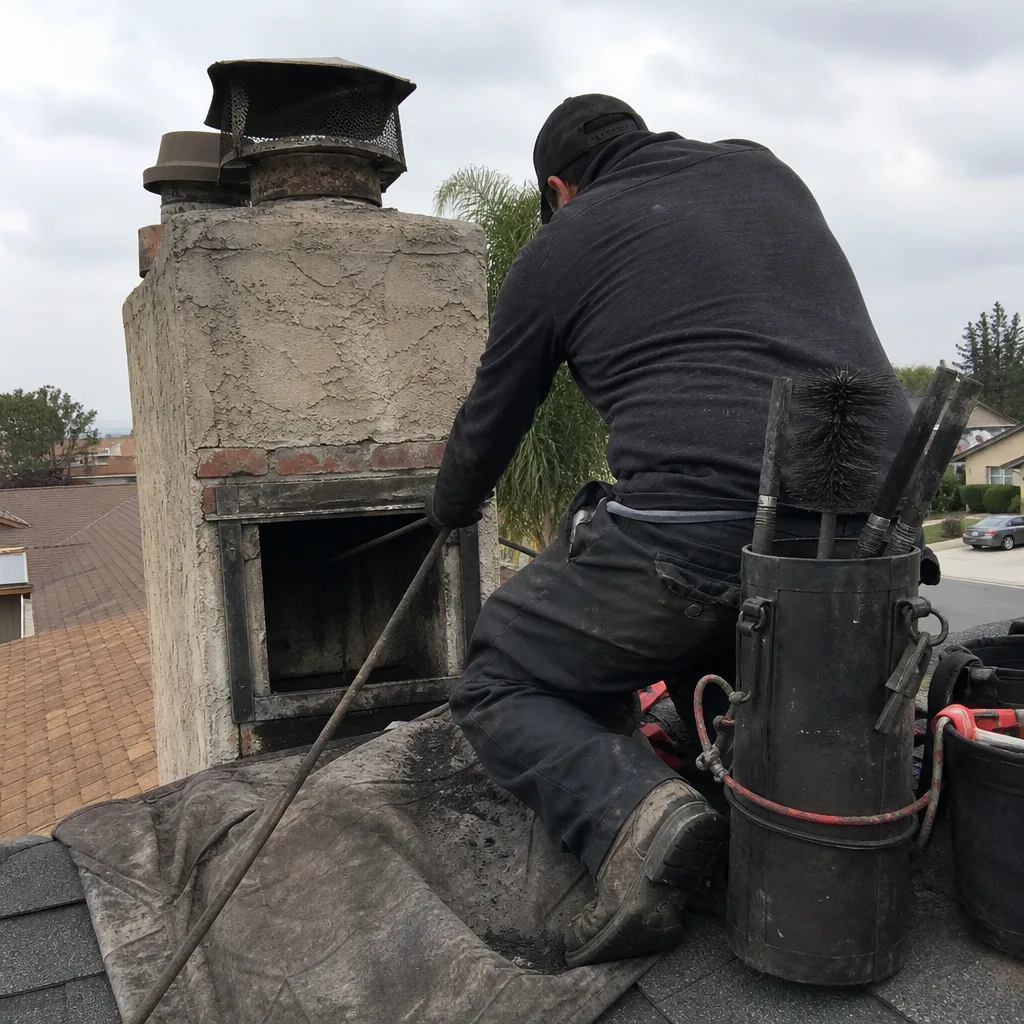 Before
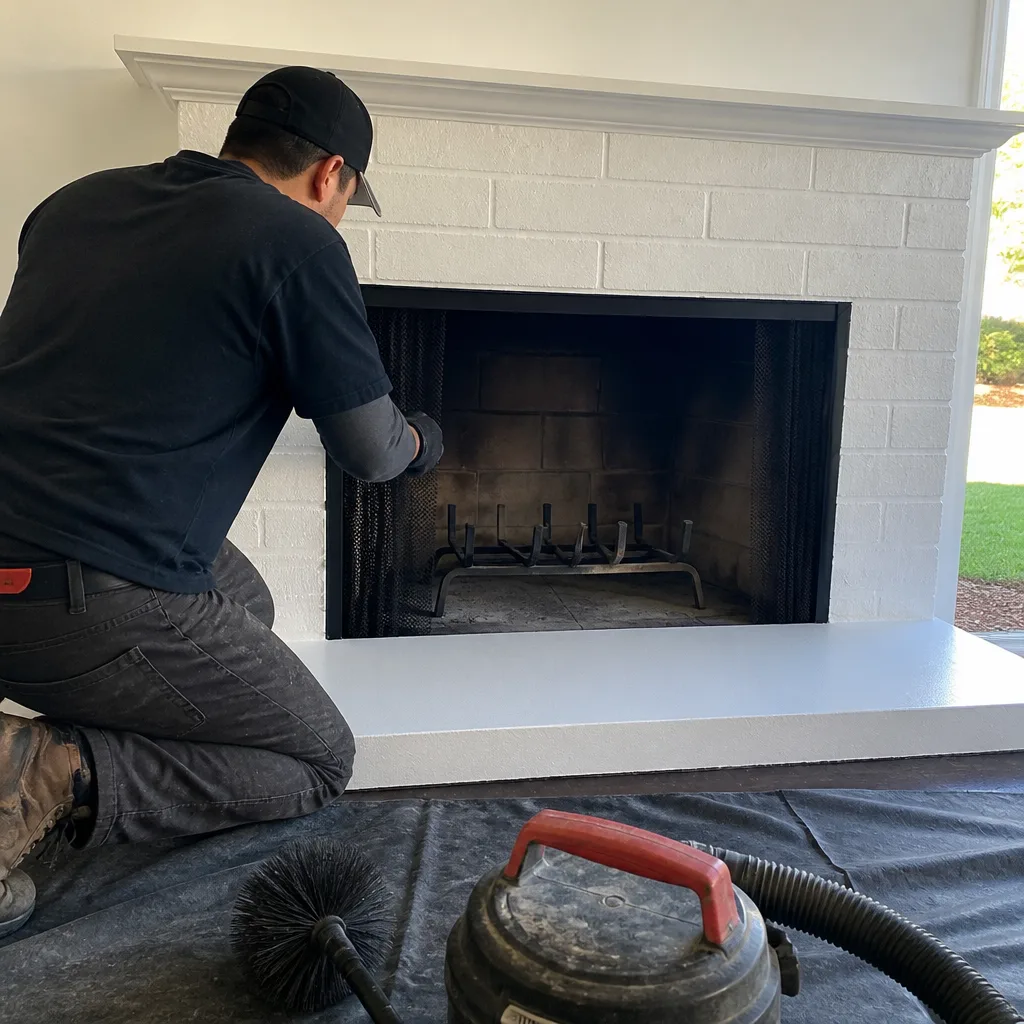 After
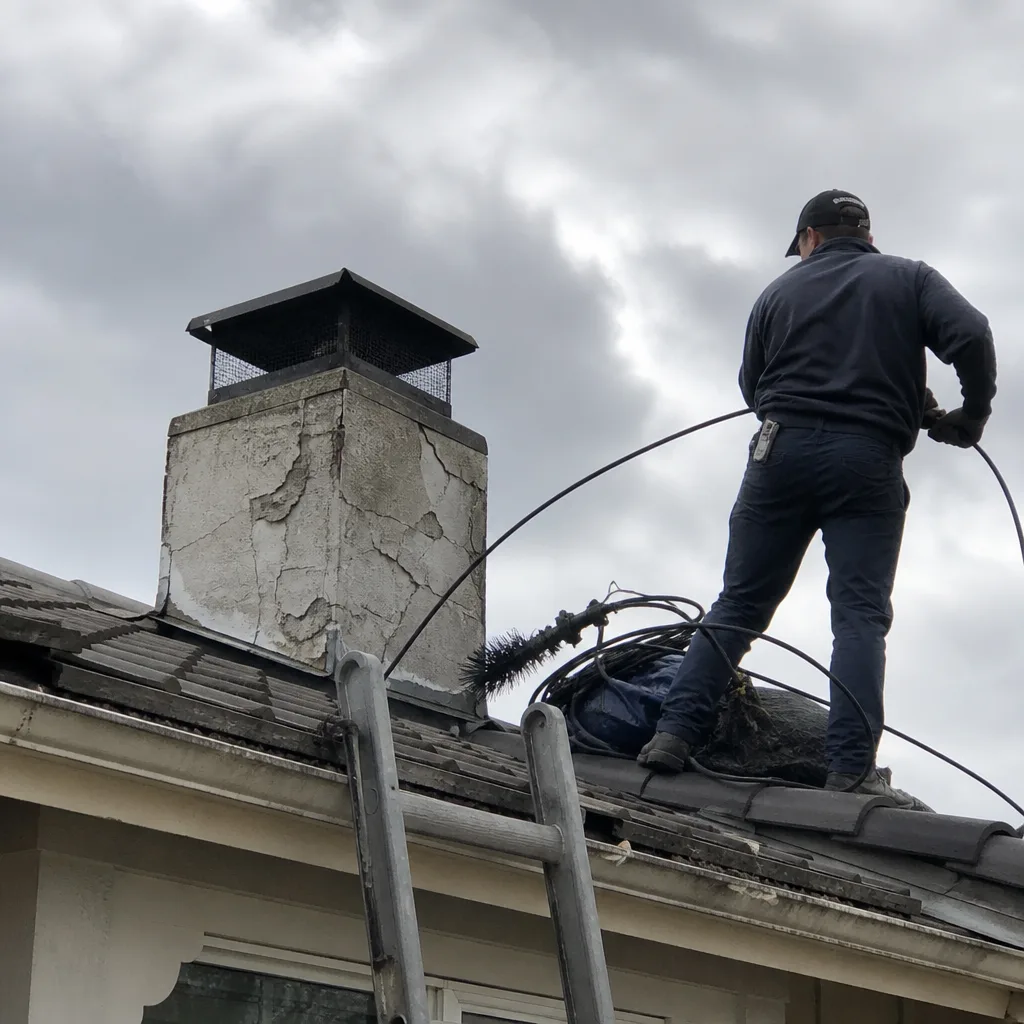 Before
 After
 Before
 After
Common Mistakes to Avoid
- Skipping the camera inspection: A brushed flue can still hide a cracked liner. Camera footage is the only way to verify the condition of the flue walls after cleaning. If your sweep doesn’t offer camera inspection, ask why.
- Assuming gas logs need no maintenance: Gas flues in Garden Grove accumulate acidic soot and moisture damage. A gas fireplace venting through a damaged flue can release carbon monoxide into the home.
- Cleaning during bird nesting season: If swifts or starlings are nesting in your chimney between March and August, they are federally protected. The cleaning has to wait until the birds leave.
- Using a chemical log as a substitute for sweeping: Chemical products can soften creosote but cannot remove it. Only mechanical brushing actually cleans the flue.
- Ignoring a cracked crown: The crown is the chimney’s roof. When it cracks, water enters the masonry and causes spalling. A cracked crown should be addressed immediately, not deferred.
- Hiring a sweep who doesn’t look at the smoke chamber: The smoke chamber traps more debris than any other part of the chimney. If it’s not cleaned, the chimney isn’t clean.
- Waiting until you smell something: By the time you smell animal droppings or soot inside the house, a blockage or buildup is already significant. Annual cleaning catches problems before they become noticeable.
When to Call a Professional
Chimney cleaning is not a DIY project, and the reasons go beyond the physical difficulty of the job. A homeowner cannot safely access the top of a chimney without proper ladder equipment and roof harness training. The flue interior is not visible from the firebox without a camera system. Animal removal involves health risks from droppings. And if there is any question about flue liner condition, operating the fireplace before an inspection puts the house at risk of chimney fire or carbon monoxide leakage, both of which are life-safety hazards that require trained evaluation.
Walnut Chimney offers free estimates in Garden Grove. Call (855) 341-3461 to schedule a cleaning, inspection, or repair assessment. Our technicians handle chimney sweeping, dryer vent cleaning, and chimney repair under one roof, so any issue found during the cleaning can be addressed in the same visit without referrals to outside contractors.
Frequently Asked Questions
Chimney cleaning prices vary based on flue size, accessibility, and the amount of debris present. A standard open-flue chimney cleaning in Garden Grove typically requires a full inspection, brushing, and camera documentation. The final quote depends on what the technician finds. Call (855) 341-3461 for an exact estimate: Walnut Chimney provides free estimates and flat-price scoping before any work begins.
Wood-burning fireplaces in Garden Grove should be cleaned once per year, regardless of how often you use them. Gas log chimneys should be cleaned every one to two years. The annual schedule has less to do with creosote volume and more to do with catching animal intrusion and moisture damage before either one becomes a structural problem.
Yes, gas fireplaces need chimney cleaning, and in Garden Grove they often need it more than wood fireplaces do. Gas produces acidic soot that combines with moisture to coat the flue liner. Years of neglect lead to liner deterioration and carbon monoxide risk. If you have a gas log set and haven’t had the flue inspected in over two years, schedule a cleaning. Call (855) 341-3461 for a free estimate.
If you skip cleaning long enough in Garden Grove, one of three things inevitably happens: a bird or rodent builds a nest that blocks the flue, moisture damages the crown and begins spalling the masonry, or soot and creosote accumulate until a chimney fire becomes possible. The first two are more common here than the third, but all three are preventable with annual maintenance.
We don’t recommend it. Accessing the top of a chimney requires ladder work at roof height, which is inherently dangerous without proper training and equipment. The flue interior cannot be seen without a camera system, and animal droppings inside a chimney carry health risks. Professional cleaning with camera inspection is the only way to verify the chimney is actually safe to use.
Yes. Walnut Chimney performs sweeping, repair, and dryer vent cleaning as a single company. If the technician finds a damaged cap, cracked crown, or deteriorated liner during the cleaning, the repair is scoped and quoted in the same visit. We work with professional-grade brands including Olympia Chimney, Famco, Copperfield, and DuraFlex to source the right materials for each specific repair.
The Bottom Line
A chimney in Garden Grove doesn’t fail because you used it too much. It fails because it sat unused long enough for animals to move in, moisture to soak the masonry, and acidic soot to coat the liner. The cleaning protocol here is annual and inspection-based, not creosote-driven. A proper visit covers the cap, crown, flue, smoke chamber, and firebox, with camera documentation to prove the chimney is safe. If you haven’t scheduled a cleaning in over a year, now is the time. Walnut Chimney serves Garden Grove homeowners with full-stack cleaning, repair capability, and dryer vent service under one call. Reach us at (855) 341-3461 for a free estimate. Chimney and dryer vent safety, handled together.
Written by the team at Walnut Chimney, serving Garden Grove since 2017. Explore more guides & resources on chimney care and home safety.